Did the First Millennium Know the Papacy?

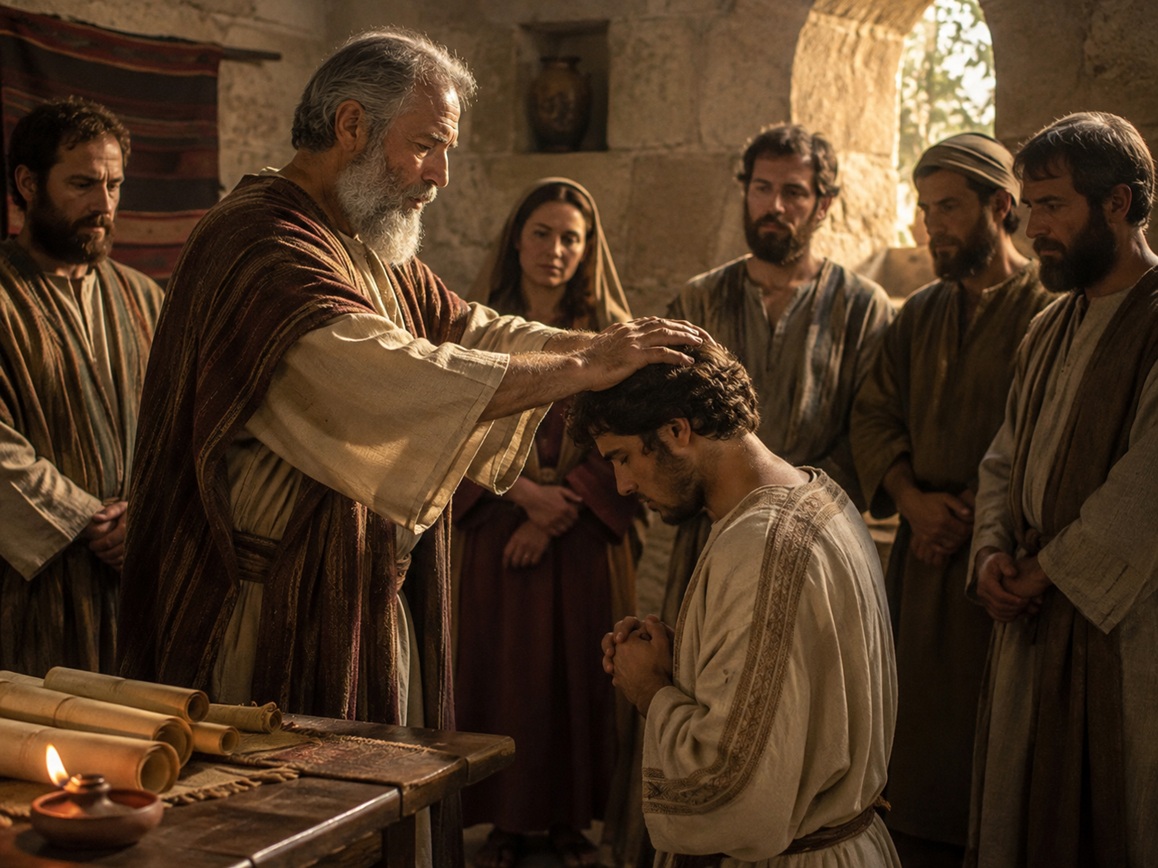
The laying on of hands in ordination

“He said to him the third time, ‘Simon, son of John, do you love me?’… Jesus said to him, ‘Feed my sheep.’”

The dispute between Rome and the Orthodox East comes down, at bottom, to a single historical question: what did the undivided Church of the first thousand years actually believe about the bishop of Rome? Both sides claim that millennium. The Orthodox hold that Rome ranked first in honor among the patriarchs — a presidency of love, a seniority among brothers. On that reading, the universal jurisdiction defined at Vatican I would have been unrecognizable to the Fathers. Catholics hold that the seed of everything Vatican I defined is visible from the Church’s first generations. Not the developed vocabulary, but the thing itself: a see that acts, teaches, receives appeals, and is treated, even by those quarreling with it, as somehow different in kind.

This page does what the neighboring pages on the Great Schism and the papacy cannot do in passing: it walks the first-millennium record itself, case by case. Victor and the churches of Asia, Stephen against Cyprian, Julius receiving Athanasius, the canons of Sardica, Chrysostom’s appeal, Leo at Chalcedon, the formula the Eastern bishops signed in 519, Nicholas facing Photius. The Orthodox reading of each case is given first, at full strength. The question for the reader is the cumulative one. Which communion’s account best explains the whole record — a first-among-equals whose equality kept slipping, or a primacy present from the beginning and unfolding under pressure?

You may leave comments below — anonymously, if you wish — but please read our policy on commenting before doing so.

Eastern Orthodox View

Jump to the Catholic View ↓

The Orthodox reading of the first millennium is not a denial that Rome mattered. It is a precise account of how Rome mattered: first in honor, not first in jurisdiction — the eldest brother in a family of patriarchates, not the father of the family.

A Primacy of Honor in a Church of Councils

The Church of the councils governed herself synodally. Nicaea settled the faith by the assembled episcopate, not by Roman decree; canon 6 of Nicaea treats Rome, Alexandria, and Antioch as parallel regional authorities, each supreme in its own sphere. The developing order (taxis) of the five patriarchal sees gave Rome the presidency — the Orthodox have never disputed that the bishop of Rome was protos — but a president of a synod is not a monarch over it. The very phrase the tradition kept, Ignatius’s church “presiding in love,” names a moral headship, not a legal one.1

The Proof-Cases Read Smaller Up Close

The Catholic case-file, examined case by case, is consistent with seniority rather than sovereignty. Victor’s threat to excommunicate the churches of Asia over the date of Easter drew a rebuke from Irenaeus — and the Asian churches did not yield; the episode is remembered because Victor overreached. Stephen’s ruling on rebaptism was defied outright by Cyprian and the African councils, and Cyprian answered Rome with the principle the East never surrendered: each bishop answers to God alone for his own church. Julius received Athanasius not as a universal judge but as the natural arbiter of a dispute the East had botched — and his own letter appeals to custom, not to divine right. The canons of Sardica, which allowed a deposed bishop to ask Rome for a retrial, were the act of a local Western council, granting a privilege; what a council grants, a council defines and can limit.2

Chalcedon Cheered Leo — and Then Checked Him

“Peter has spoken through Leo” is the Catholic file’s favorite acclamation, but the same fathers shouted it only after examining Leo’s Tome for agreement with Cyril — the council judged the pope’s teaching, not the reverse. And the same council enacted canon 28, grounding the privileges of both Rome and Constantinople in the imperial rank of their cities — the plainest first-millennium statement of what the East believed primacy rested on. Rome’s rejection of the canon shows what Rome claimed; it does not show the East agreed.3

Signatures Under Pressure Prove Little

The formula of Hormisdas, with its confession that the apostolic see had kept the faith unstained, was signed to end a schism the East was desperate to close, under an emperor determined to close it; documents signed under such pressure — like the union formulas of Lyons and Florence centuries later — register diplomacy as much as doctrine, and the East’s subsequent history is consistent with its never having internalized the formula’s maximal reading. When Nicholas I pressed the full Roman claim against Photius in the ninth century, the East did not recognize an ancient right being enforced; it recognized a new thing being asserted — and said so.4

What the Record Best Supports

Set the whole record together and, the Orthodox conclude, it best supports a primacy of honor within a conciliar Church: real deference to Rome’s stability and orthodoxy; appeals to Rome as a court of weight, among other weights; and firm resistance whenever honor tried to become jurisdiction. What the first millennium nowhere shows, they hold, is a bishop exercising ordinary, immediate authority over every church on earth — which is what Vatican I defined, and what the East was therefore right to refuse.5

Endnotes
  1. Nicaea I (325), canon 6; Ignatius of Antioch, To the Romans, prologue. On the taxis of the five sees, the Catholic–Orthodox Chieti document (2016), §15, states the shared history: the order was “based on and sanctioned by the ecumenical councils, with the see of Rome occupying the first place.”
  2. Victor: Eusebius, Church History 5.23–24. Stephen and Cyprian: Cyprian, Letters 71–75, with the Seventh Council of Carthage (256). Julius: Athanasius, Apology Against the Arians 20–35. Sardica (343), canons 3–5.
  3. Acts of Chalcedon (451), session 2, for the examination and acclamation of the Tome; canon 28 for the imperial rationale.
  4. The formula of Hormisdas (519); on the Photian controversy, the correspondence of Nicholas I and the councils of 867–880.
  5. Vatican I, Pastor Aeternus (1870), ch. 3, defining ordinary and immediate jurisdiction over the whole Church.

Catholic View

Grant the left panel its genuine points, because they are genuine: the first-millennium Church was profoundly synodal; Victor was rebuked; Cyprian resisted; the developed vocabulary of Vatican I is nowhere in the Fathers. The Catholic claim is not that the first millennium talked like 1870. It is that the record, taken whole, is better explained by a real Petrine authority present from the beginning than by an honorary presidency — because honor does not behave the way Rome behaved, and, more telling still, honor is not treated the way Rome was treated by the very churches resisting her.

Watch What Rome Does, Not Only What Rome Is Called

Within the first century, Rome wrote to Corinth — a church with closer apostolic neighbors — commanding restoration of its deposed presbyters, and Corinth kept the letter and read it in the liturgy for generations. Victor judged a question of universal practice and reached for a weapon — excommunication of whole provinces — that no one told him he did not possess: Irenaeus begged him not to use it, which concedes he had it. Stephen ruled on rebaptism against Cyprian and the African councils — and it is Stephen’s ruling, not Cyprian’s protest, that the whole Church, East and West, holds today. These are early, repeated, and one-directional: no comparable record exists of Alexandria commanding Rome, or Antioch judging Gaul. A presidency of love that issues binding rulings on discipline and doctrine, and wins, is behaving remarkably like jurisdiction.1

The Appeals Ran One Way

When the East’s own machinery failed, its bishops did not convene a rival synod and rest; they went to Rome. Athanasius, deposed by Eastern councils, was received and vindicated by Julius, whose letter scolds the East for ignoring “the custom… for word to be written first to us, and then for a just decision to be passed from this place.” The Orthodox reading takes “custom” as less than right; but a custom of first referral and final decision, already old enough to scold with in 341, strongly supports something more than courtesy. Sardica then wrote appeals to Rome into canon law — and however one ranks that council, the East’s greatest bishop used the road it paved: John Chrysostom, deposed at the Oak, appealed to Innocent of Rome, who annulled the proceedings. Basil begged Rome’s intervention in the Antiochene schism. Appeals do not create authority; they presuppose it. Courts of honor do not reverse verdicts.2

Chalcedon, Read Whole

Yes, the fathers at Chalcedon tested Leo’s Tome against Cyril before acclaiming it — a council is not a dictation session, and Catholic teaching never said otherwise. But read what they did around the testing: the council was chaired by Roman legates at Rome’s insistence, condemned the “Robber Council” that Leo alone among the patriarchs had rejected, deposed Dioscorus in the legates’ formula — for daring, among other crimes, to excommunicate the pope — and wrote to Leo asking him to confirm its acts, because, as the fathers put it, he presided over them as head over members. And when Leo refused canon 28, the canon — alone of Chalcedon’s work — was never accepted at Rome and stood outside the West’s canon law, however operative it became in the East. The pattern is not honor cheered and jurisdiction checked; it is a council that argued, examined, and then sought from one see the thing it sought from no other: ratification.3

The Formula the East Signed

The formula of Hormisdas deserves more weight than a diplomatic instrument, precisely because of what it says and who signed it. To end the Acacian schism in 519, the patriarch of Constantinople and the Eastern episcopate subscribed a Roman text confessing that “in the Apostolic See the Catholic religion has always been kept unsullied,” and binding themselves to communion with it as the test of orthodoxy. Signed under pressure? Union documents usually are — including Nicaea’s own subscriptions. What the pressure argument cannot explain is why this was the formula that could end an Eastern schism at all: the text presupposes, on both sides, that communion with Rome is where the question of orthodoxy gets settled. One does not end a schism by signing a compliment.4

What Best Explains the Whole Record

The honest summary runs like this. The first millennium nowhere states Vatican I’s vocabulary — granted, and the Catholic doctrine of development expects exactly that, as it expects Nicaea’s vocabulary to be absent from the second century. What the record shows, repeatedly and from the earliest documents, is a see that teaches and is not corrected, judges and is not judged, receives the East’s appeals in its crises, anchors every reunion, and supplies the one signature councils ask for. An honorary presidency explains some episodes; it is consistent with a few; it strains against the appeals, breaks on Hormisdas, and cannot say why the “first among equals” was never once treated as merely equal when the faith was at stake. The modern dialogue has reached the same fork with admirable candor: both sides agree, in the Ravenna document’s words, that Rome was protos in the undivided Church; the dispute is over the prerogatives — which is this page’s question, and the record above is the evidence for answering it. What Rome and the East now say together, and how far it reaches, is taken up on the Great Schism page; who ratifies a council, on the next.5

The full essay walks each case with its sources — Clement to Corinth, Victor, Stephen, Julius’s letter, Sardica, Chrysostom’s appeal, Chalcedon’s acts and canon 28, the Hormisdas formula, and Nicholas and Photius — with the Orthodox reading of each given before the Catholic one. Download it from the summary below — and the comments are open, anonymously if you prefer.

Endnotes
  1. 1 Clement (c. 96), esp. chs. 57–59; Dionysius of Corinth, in Eusebius, Church History 4.23, on the letter still being read; Eusebius 5.23–24 on Victor and Irenaeus; Cyprian, Letters 71–75 — the Church’s subsequent practice followed Stephen (against rebaptism), as Augustine later noted against the Donatists.
  2. Julius, in Athanasius, Apology Against the Arians 35 (NPNF translation); the scope of “to us” is debated, and the Orthodox reading is noted in the left panel. Sardica (343), canons 3–5. Chrysostom’s appeal: his letters to Innocent I, with Palladius, Dialogue. Basil: Letters 66, 69, 70.
  3. Acts of Chalcedon, sessions 1–3; the council’s letter to Leo (“you presided over us as head over members”) and Leo’s replies on canon 28. The acclamation “Peter has spoken through Leo” is from session 2.
  4. The formula of Hormisdas (519), in the translation printed in Denzinger; subscribed by Patriarch John of Constantinople and subsequently by the Eastern bishops.
  5. Joint International Commission for Theological Dialogue, Ravenna document (2007), §41: both sides agree Rome was first in the taxis and that the bishop of Rome was protos among the patriarchs; they “disagree on the interpretation of the historical evidence from this era regarding the prerogatives of the bishop of Rome as protos.”

Summary

Both communions claim the first millennium, and the modern dialogue has drawn the line precisely. Both sides agree — in the Ravenna document’s own words — that Rome was first in the order of the churches and its bishop protos among the patriarchs. The dispute is what the first place carried: honor within a conciliar family, or a real Petrine authority. That question is answered by the record, case by case.

Watch what Rome does, not only what Rome is called. Within the first century, Rome commands the restoration of Corinth’s presbyters — and Corinth keeps the letter and reads it at worship for generations. Victor reaches for the excommunication of whole provinces, and Irenaeus begs him not to use a weapon nobody says he lacks. Stephen rules on rebaptism against Cyprian and the African councils — and it is Stephen’s ruling the whole Church holds today. No comparable record runs the other direction.

The appeals ran one way. Athanasius, deposed in the East, is vindicated by Julius, whose letter appeals to “the custom… for word to be written first to us, and then for a just decision to be passed from this place.” Sardica writes the road into canon law; Chrysostom takes it; Innocent annuls his deposition; Basil begs Rome’s intervention at Antioch. Appeals presuppose authority. Courts of honor do not reverse verdicts.

Chalcedon examined Leo’s Tome — and then asked Leo for the one thing it asked of no one else. Roman legates presided; Dioscorus was deposed, in part for daring to excommunicate the pope; the fathers acclaimed “Peter has spoken through Leo” and wrote asking him to confirm their acts as head over members. When he refused canon 28, that canon alone stood outside the common law. And in 519 the Eastern episcopate ended its own schism by signing Rome’s formula — that “in the Apostolic See the Catholic religion has always been kept unsullied.” One does not end a schism by signing a compliment.

What best explains the whole record? An honorary presidency explains some episodes and strains against the rest — the rulings that stuck, the appeals that ran one way, the ratification councils sought from one see only. The Catholic reading — a real primacy, present early, developing under pressure as every doctrine developed — has the fewer anomalies to explain. The first millennium did not speak Vatican I’s vocabulary. It behaved, again and again, as though it believed the thing the vocabulary would one day define.