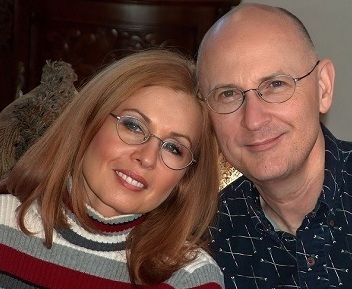
A man who spends thirty-five years in a religion and then leaves it
owes some account of both halves — why he stayed as long as he
did, and what finally made staying impossible. These three pages are
that account, told in order.
Before Bethel
Pre-Bethel Life
is the story of my childhood and of how I became a Witness. It
begins in 1949 with a sixteen-year-old mother, a stepfather and a
grandfather whose patience shaped me, and a biological father
whose abuse was countered by the love of a Heavenly Father. It
includes a crisis of faith at age eight resolved one night under
the stars, and a Bible for a ninth-birthday present. It ends
where the Witnesses found me, at fourteen, in the turmoil of the
mid-1960s, eager to believe the promise of a paradise close at
hand — and with the spring of 1967, when I turned down two
scholarships to Santa Clara University in order to pioneer during
the “few remaining years” before Armageddon.
At Bethel
Bethel Life covers seven
years at the Brooklyn headquarters, in the Service Department, as
secretary to the Service Department Overseer — which meant
handling correspondence regarding elders, congregations, circuit
and district overseers, assemblies and conventions, and working
with the Writing Department of the Society. This is where I
learned ‘how the sausage is made’, so to speak, and
gained a view of the organization from inside the machinery
rather than from a seat in the Kingdom Hall. I wrote material that
appeared in The Watchtower and Our Kingdom Ministry,
and gave convention talks to audiences of tens of thousands.
After Bethel
Post-Bethel Life
covers my emerging doubts about the organization, how I handled
and eventually sublimated those doubts for twenty years until I
could no longer in good conscience pretend to believe what I was
teaching and practicing. When the cognitive dissonance abated, I
was surprised to find that Suzanne had herself come to similar
conclusions, and we ceased association with the organization in
2000. Neither of us was disfellowshipped, which matters more than
it may seem: this website is not built by someone responding to a
punishment. The “Post-Bethel Life” page includes my
early letter to the Society regarding my doubts along with the
Society’s reply, reproduced so that the exchange can be read
in full rather than merely characterized.
It also covers what came next — extensive reading,
investigating various Christian denominations, and eventually
entering the Church I had spent three decades arguing against.
The books that did the most damage to my certainty are named on
that page, many of them by C. S. Lewis, who was not trying
to make anyone a Catholic but ended up doing so anyway.
Why This Section Exists
It is here because the questions this site raises are sometimes
put by people with no idea what someone leaving the Witnesses will
be giving up — the friendships, the certainty, the shape of
a whole life, and in many cases even family. I know what the cost
is. That does not make me right. It does mean that when these pages
say the cost is heavy, they are not speaking theoretically.
And it is here out of love for the many relatives, friends and
acquaintances of ours who are Witnesses still. This site is
written for them and dedicated to them.
A Thing Worth Doing
The homepage opens with a line of G. K. Chesterton’s:
“If a thing is worth doing, it is worth doing badly.”
It is the great Catholic writer’s defense of the amateur
— the one who does a thing himself, out of love, rather
than leaving it to someone better qualified. I took Chesterton
at his word, and stopped putting off composing this website out
of fear of not doing it well enough.
The many years of research behind it were done out of love
— not to win arguments, but to tell a bit of personal
history and to explain why
Suzanne
and I walked the road we did. If what is written here spares one
person years of spiritual detour, or simply helps someone I love
understand our story, it will have been worth doing — even
if done badly.