A Path for Jehovah’s Witnesses

Brooklyn Bethel

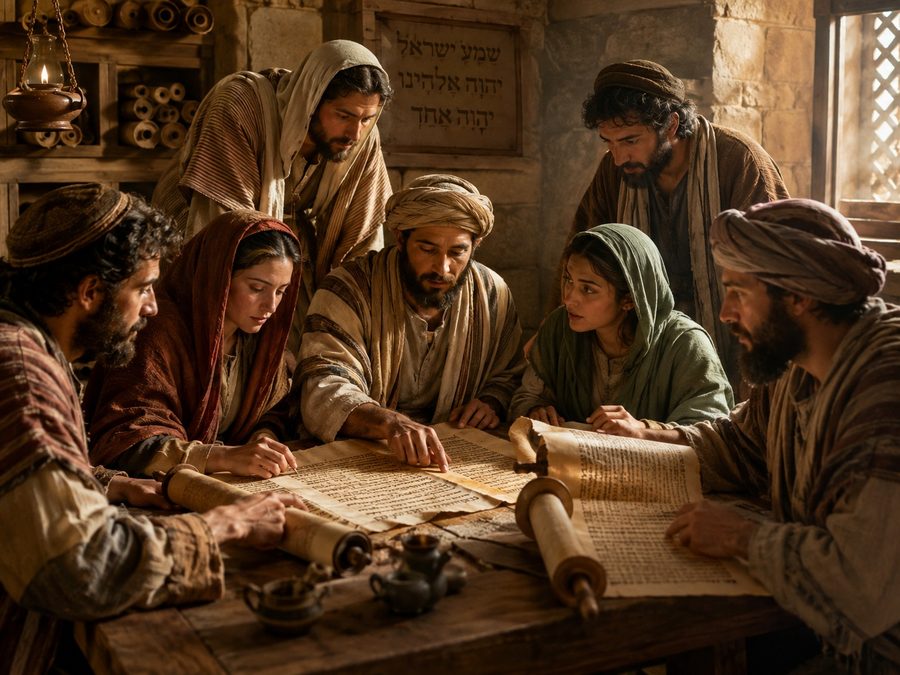
“Now these Jews were more noble than those in Thessalonica, for they received the word with all eagerness, examining the scriptures daily to see if these things were so.”

You were taught to admire the Beroeans — they checked everything against Scripture, and they were called noble for it. This page asks nothing more of you than what the Watchtower itself praises: examine, daily, whether these things are so. I spent thirty-five years as one of Jehovah’s Witnesses, most of them as an elder and seven of them at Brooklyn Bethel, so the pages on this path were written by someone who knows exactly what you were taught, because he taught it.

The site has some seventy pages, and you should not wander into them at random. The order below is deliberate: it starts where your safety requires, moves to the claims everything else depends on, and saves the deepest doctrine for when the foundations have been tested. Take it at your own pace — nobody is timing you, and nothing here asks you to decide anything today.

You may leave comments below — anonymously, if you wish — but please read our policy on commenting before doing so.

Eleven Stops, in Order

Each stop builds on the ones before it. The one-line notes say why.

  1. Counting the Cost — read this first, privately. It is about the fear, and it does not pretend the fear is silly.
  2. Was There a Great Apostasy? — the foundation under everything: if Christianity never failed, there was nothing for 1919 to restore.
  3. By What Authority? — the faithful-slave claim itself, tested against its own history.
  4. When Did Jerusalem Fall? — 607 or 587: the arithmetic beneath 1914, checked against evidence outside everyone’s control.
  5. Who Is “This Generation”? — the deadline attached to 1914, and the five times it moved.
  6. What Is the Parousia? — the invisible presence: what the word meant, and the year the presence was moved from.
  7. The New World Translation — whether the Bible in your hand says what the Greek says, verse by verse.
  8. How Should Sin Be Handled? — committees, removal, and shunning, beside the confessional they replaced.
  9. Is Jesus Michael the Archangel? — all five Michael texts, and the chapter written to answer the question.
  10. Is God a Trinity? — the deepest question last, when the witnesses you trusted have been cross-examined.
  11. Your First Mass — when you are curious, not before: what actually happens in a Catholic parish, walked in and back out with no obligation.

Two side-trips are worth taking when their subjects tug at you: Blood and the Sanctity of Life if that teaching has ever touched your family, and What Is the Soul? before the resurrection and hell pages. And the About pages will tell you who is talking to you, and what leaving cost him.

Summary

Start with Counting the Cost, because your safety comes before my arguments. Then test the foundations in order: the Great Apostasy, the faithful-slave claim, 607 and 1914, the generation, the parousia, and the translation. The doctrine pages come after, and Your First Mass waits at the end for whenever curiosity arrives. Examine the scriptures daily — the Beroeans were called noble for checking, not for trusting.