A Path for Skeptics

Arguments pro and con

“Always be prepared to make a defense to any one who calls you to account for the hope that is in you, yet do it with gentleness and reverence…”

You will not be talked down to here. The skeptic’s case is stated on every page in its strongest form, from skeptical sources, before anything is said against it — and several of the objections on this path kept me honest while writing it. What this path asks of you is only what you ask of believers: follow the argument where it goes, and let the strongest version of the other side be the one you answer.

The order is a dependency order. Definitions come first, because most debates about God die in the first five minutes over what the word means. The arguments and the objections come next, each given its own page. And history comes last — because the argument about miracles has to be settled before any historical case can even be heard, and because the resurrection is where the question stops being abstract.

You may leave comments below — anonymously, if you wish — but please read our policy on commenting before doing so.

Twelve Stops, in Order

Each stop builds on the ones before it. The one-line notes say why.

  1. What Do We Mean by “God”? — the definition first: the God of classical theism is not the sky-tyrant most atheism rejects.
  2. What Do We Mean by “Faith”? — the method: whether faith really means believing without evidence.
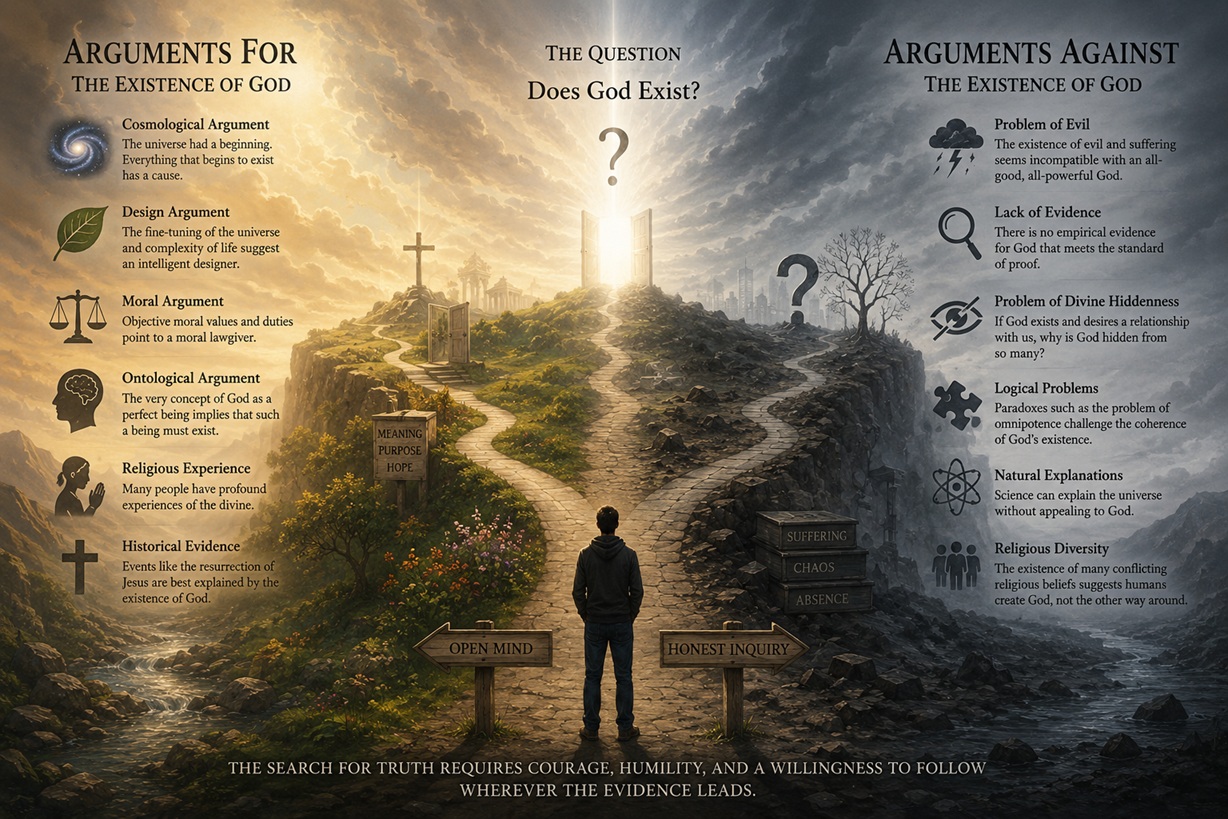
  3. Arguments Pro and Con — the classical case and the strongest objections, weighed side by side.
  4. Could God Permit Evil? — the best atheist argument, faced at full strength.
  5. Why Is God Hidden? — the second-best: Schellenberg’s argument, stated formally and fairly.
  6. Are Science and Faith Enemies? — the conflict thesis against the actual record.
  7. Can Matter Think? — the hard problem, and the argument from reason.
  8. Can We Be Good Without God? — yes, you can be good; the question is what makes goodness binding.
  9. Rational to Believe in Miracles? — Hume’s gate: it must be opened before history can testify.
  10. Did Jesus Rise from the Dead? — the historical case, argued from facts critical scholars concede.
  11. Why Christianity? — among ten thousand religions, the one claim that volunteers to be checked.
  12. Does History Condemn the Church? — Crusades, Inquisition, Galileo: the record examined without excuses.

Side-trips as they interest you: Does Evolution Disprove God? after the science stop, Why So Many Religions? before Why Christianity, and What Is the Bible? whenever the documents themselves become the question.

Summary

Definitions, then arguments, then objections, then history: what “God” means and what faith is; the case for and against; evil and hiddenness at full strength; science, mind, and morality; then Hume’s gate on miracles — and through it, the resurrection, where the question stops being abstract. Every page states the skeptic’s case first, from skeptical sources. Follow the argument where it goes; that is all this path asks.