Should Babies Be Baptized?

Jesus and the Samaritan woman at the well

“Truly, truly, I say to you, unless one is born of water and the Spirit, he cannot enter the kingdom of God.”

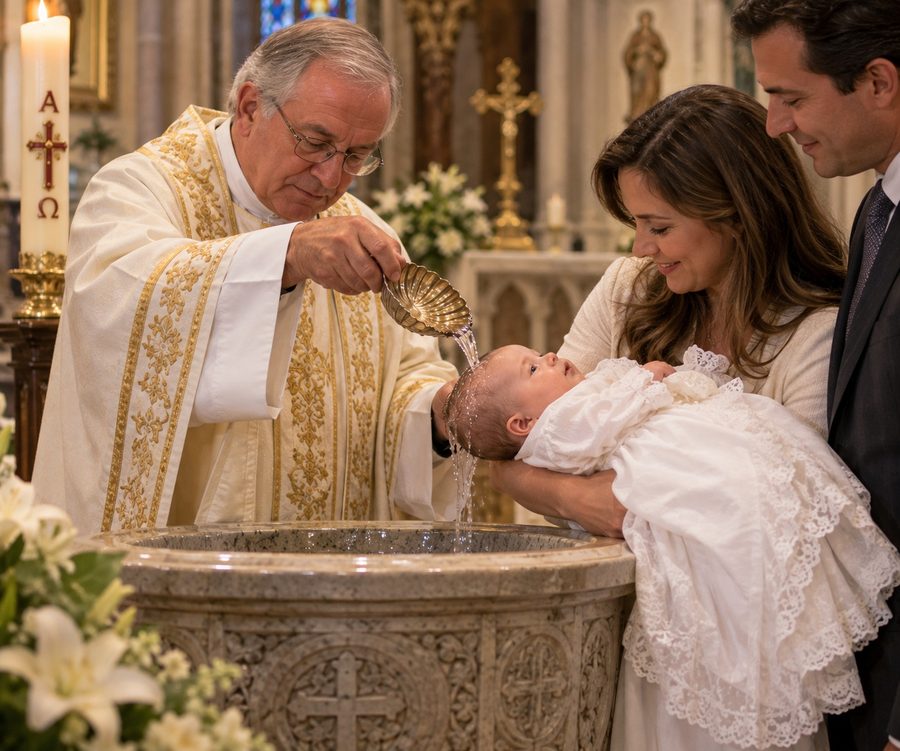
Few sights divide Christians as quietly as a baby at a font. To a Catholic — and to a Lutheran, an Anglican, or a Presbyterian — it is the most natural scene in the Church: grace given to a child of the covenant, as circumcision was given to eight-day-old sons of Israel. To a Baptist or evangelical Christian it is close to a contradiction in terms: baptism is the believer’s public confession of a faith already alive, and an infant can confess nothing. Behind the two instincts stand two different answers to a prior question — is baptism something God does to us, or something we testify about ourselves?

The dispute is old, but not as old as its parties assume. The practice of baptizing infants is documented in the Church’s earliest generations — so firmly that the only recorded ancient controversy was over which day of a newborn’s life the water should come. The demand that baptism wait for a personal profession dates, as a movement, to the sixteenth century. Which side has read the New Testament rightly — its promises “to you and to your children,” its household baptisms, its startling claim that baptism “now saves you” — is the question this page takes up.

You may leave comments below — anonymously, if you wish — but please read our policy on commenting before doing so.

Protestant View

Jump to the Catholic View ↓

The case stated here is the Baptist and evangelical one — the credobaptist position — and it should be said at once that it is not all of Protestantism’s: Lutherans, Anglicans, and the Reformed baptize their infants. But it is the conviction of the largest Protestant family in America, and its argument is simple and scriptural: in the New Testament, faith comes first.

Believe, Then Be Baptized

The pattern is fixed from Pentecost onward: “Repent, and be baptized” (Acts 2:38) — repentance first, water second. The Ethiopian official hears the gospel, believes, and then asks for baptism (Acts 8). The Philippian jailer believes and is baptized the same night. Every baptism the New Testament narrates is the baptism of someone who has heard, believed, and chosen. An infant can do none of those things; baptizing one inverts the order the apostles kept without exception.1

An Ordinance, Not a Mechanism

Baptism, on this view, is an ordinance: an act of obedience that testifies to a salvation already received by faith alone, picturing the believer’s death and resurrection with Christ. It does not convey what it pictures. The Baptist Faith and Message defines it as “an act of obedience symbolizing the believer’s faith,” and Peter himself seems to guard against the mechanical reading: baptism saves “not as a removal of dirt from the body but as an appeal to God for a clear conscience” (1 Pet. 3:21) — and an appeal requires an appellant. Water cannot regenerate; only the Spirit does, through faith. To teach otherwise makes salvation a ritual transaction — the very thing the Reformation rose against.2

The Missing Babies

If the apostles baptized infants, Scripture forgot to mention it. No infant baptism is narrated anywhere in the New Testament; the “household” passages name no children, and in at least one case the whole household is said to have believed (Acts 18:8) — which infants cannot. An argument from silence cuts against the practice, not for it: a church commanded to baptize babies would surely show one baby being baptized.3

A Development, Not a Command

History, on this reading, shows the practice growing rather than beginning: emerging in the late second and third centuries alongside an increasingly mechanical doctrine of baptismal grace and a rising fear for dying newborns, and becoming universal only as Christendom did. Tertullian, around the year 200, explicitly counseled delaying baptism for little children — proof that the question was live and the practice not yet fixed. What the apostles commanded is what the Baptist does: make disciples, and baptize the disciples made.4

Endnotes
  1. Acts 2:38; 8:26–39; 16:30–34; Matthew 28:19, where making disciples precedes baptizing in the commission’s word order.
  2. Baptist Faith and Message 2000, Article VII; 1 Peter 3:21, RSV.
  3. Acts 16:15 (Lydia); 16:33 (the jailer); 1 Corinthians 1:16 (Stephanas); Acts 18:8 (Crispus, whose household believed).
  4. Tertullian, On Baptism 18.

Catholic View

Notice first who is on which side, because the lines do not run where “Catholic versus Protestant” suggests. Luther baptized infants and defended it hotly; so did Calvin, Cranmer, and Wesley; Lutherans, Anglicans, Presbyterians, and Methodists baptize them still. The believer’s-baptism position is one Protestant family’s conviction, born in the sixteenth century with the Anabaptists — who were opposed on this exact point by every magisterial Reformer. When the Baptist argues that baptism must wait for profession, his first opponents are Wittenberg and Geneva. The Catholic case below is, on most of its points, theirs too.

What the New Testament Says Baptism Does

The credobaptist case rests everything on the order believe, then be baptized — which is indeed the order for converts, then and now: a Catholic adult entering the Church tonight would believe first and be baptized after. The question is what baptism does when it comes, and there Scripture’s language is not the language of testimony. “Unless one is born of water and the Spirit, he cannot enter the kingdom of God” (John 3:5). “Repent, and be baptized every one of you… for the forgiveness of your sins” (Acts 2:38). “Rise and be baptized, and wash away your sins” (Acts 22:16). “Baptism… now saves you” (1 Pet. 3:21) — Peter’s own sentence, with the qualifier the left panel quotes guarding against superstition, not against efficacy: the water works no magic on skin; it saves as God’s appointed appeal, “through the resurrection of Jesus Christ.” Paul does not call baptism a picture of dying with Christ; he says “we were buried with him by baptism into death” (Rom. 6:4). A symbol announces; these texts say baptism effects. The Catholic doctrine is simply the sum of the verbs.1

The Promise Is to Your Children

Then comes the question of who may receive it, and Peter answers it in the very Pentecost sermon the left panel quotes: “For the promise is to you and to your children” (Acts 2:39) — covenant language every Jew in the crowd knew, because for two thousand years God’s covenant sign had been given to infants. Circumcision was commanded for the eight-day-old (Gen. 17:12), who believed nothing, chose nothing, and received everything. Paul draws the line straight: in baptism “you were circumcised… with the circumcision of Christ” (Col. 2:11–12). If the sign of the old covenant belonged to children and the new covenant is better and wider, the burden of proof falls on whoever would now exclude them — and the New Testament records no such exclusion anywhere. It records households baptized whole — Lydia’s, the jailer’s, Stephanas’s — in a world where “household” meant everyone under the roof, and it records the Lord indignant when little ones were kept from Him: “Let the children come to me, do not hinder them” (Mark 10:14).2

The Only Ancient Debate Was About Which Day

History then testifies with one voice and one famous exception. Origen, born to Christian parents about the year 185, writes that “the Church received from the apostles the tradition of giving baptism even to infants.” In 253, a bishop named Fidus proposed that baptism should wait until the eighth day of life, on the analogy of circumcision; Cyprian and a council of sixty-six bishops answered that the grace of God should be withheld from no one born of man — the newborn need not wait even a week. That is the only recorded ancient controversy about infant baptism: not whether, but how soon. The exception is Tertullian, who counseled delay — advice that presupposes the practice he is advising against, and which he grounded not in apostolic command but in prudence about post-baptismal sin. A church-wide practice that no council imposed, no father remembers beginning, and whose only debate concerned the newborn’s first week, is not a third-century innovation. It is what receiving something from the apostles looks like.3

What an Infant Can Receive

The deepest objection is the theological one: the infant can contribute nothing. The Catholic answer is that this is not the objection to the practice; it is the meaning of it. Baptism is not the believer’s gift to God but God’s gift to the believer — and a gift is precisely what a newborn can receive. The infant at the font contributes exactly what the eight-day-old contributed to his circumcision, what the paralytic’s friends contributed when Jesus, “seeing their faith,” forgave his sins (Mark 2:5), and what any of us contributed to being born the first time: nothing but need. Faith is not bypassed; the parents and the whole Church profess it, and the child is raised to make it his own — which is why the Church confirms, catechizes, and hears the grown child’s own confession. A theology in which grace waits upon achievement, even the achievement of believing, has quietly made salvation begin with us. The font says otherwise, and says it best over a child who can do nothing at all.4

The full essay walks the whole case: what the New Testament’s baptism verbs actually claim, the covenant argument from circumcision, the household texts, Origen, Cyprian’s council and Tertullian honestly weighed, and what the practice means for a theology of grace. Download it from the summary below — and the comments are open, anonymously if you prefer.

Endnotes
  1. John 3:5; Acts 2:38; 22:16; 1 Peter 3:21; Romans 6:3–4; Titus 3:5 (“the washing of regeneration”). Quotations RSV.
  2. Acts 2:39; Genesis 17:12; Colossians 2:11–12; Acts 16:15, 33; 1 Corinthians 1:16; Mark 10:13–16.
  3. Origen, Commentary on Romans 5.9 (c. 248); Cyprian, Letter 64 (To Fidus), with the council of 253; Tertullian, On Baptism 18.
  4. Mark 2:1–5; Catechism of the Catholic Church §§1250–1252, 1282.

Summary

Check who is on which side first. Luther, Calvin, Cranmer, and Wesley all baptized infants; Lutherans, Anglicans, Presbyterians, and Methodists still do. The believer’s-baptism position is one Protestant family’s conviction, opposed on this exact point by every magisterial Reformer. On the font, Rome and Wittenberg stand together.

The New Testament’s baptism verbs do things. Born of water and the Spirit; baptized for the forgiveness of your sins; wash away your sins; baptism now saves you; buried with him by baptism. A symbol announces; these texts effect. Peter’s “not a removal of dirt” guards against superstition, not against efficacy — the same sentence says the baptism saves.

The promise is “to you and to your children,” and the crowd knew what that meant. God’s covenant sign had gone to eight-day-olds for two thousand years, and Paul calls baptism the circumcision of Christ. If the old sign belonged to infants and the new covenant is wider, the burden of proof lies on whoever would exclude them — and no exclusion appears anywhere in the New Testament, while whole households are baptized and the Lord says: let the children come.

The only ancient debate was which day of the baby’s life. Origen: the Church received infant baptism “from the apostles.” Cyprian’s council of 253 ruled a newborn need not wait even until day eight. Tertullian’s counsel of delay presupposes the practice he is advising against. No council imposed it; no father remembers it beginning; that is what apostolic inheritance looks like.

The infant contributes nothing — which is the point. Baptism is not the believer’s gift to God but God’s gift to the believer, and a gift is what a newborn can receive. Grace that waits upon achievement, even the achievement of believing, has quietly made salvation begin with us. The font says otherwise — and says it best over a child who can do nothing at all.