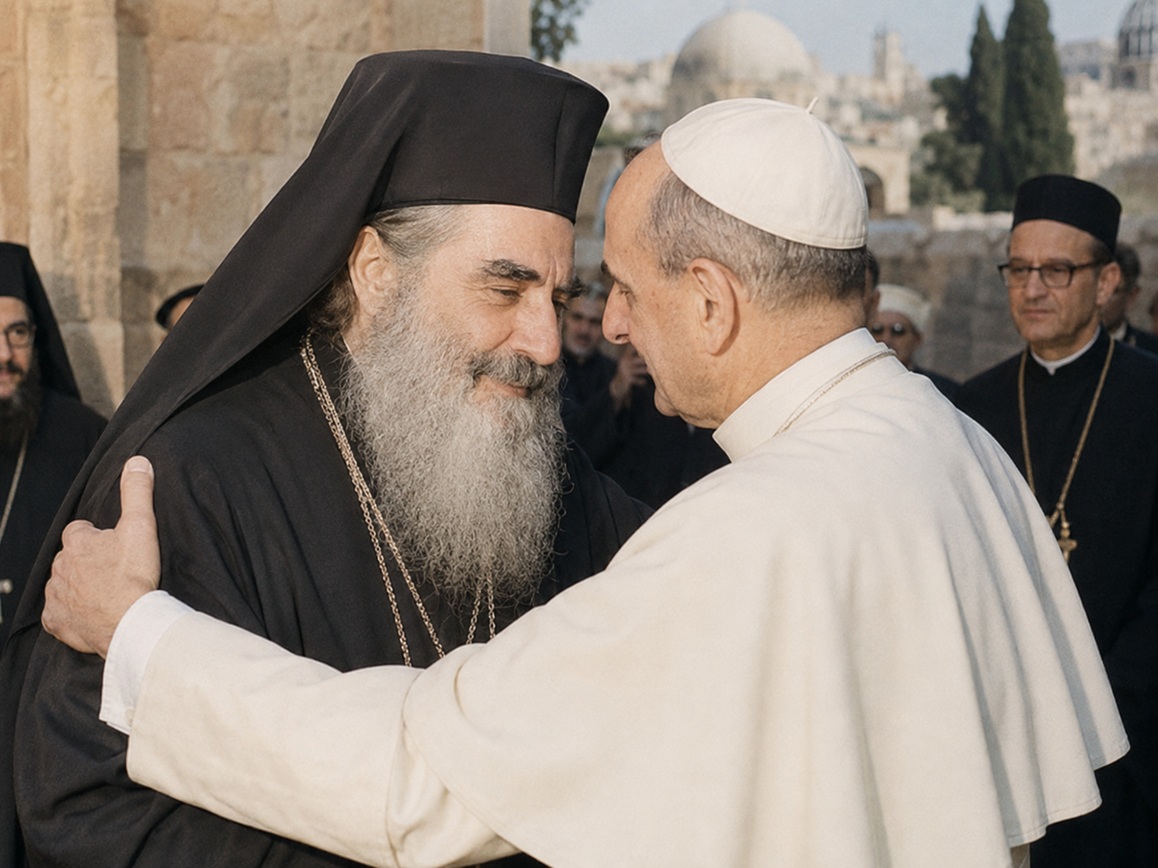
A Path for the Orthodox

Placeholder image

“Behold, how good and pleasant it is when brothers dwell in unity!”

This is a dispute between brothers, and the pages on this path never forget it. Your church has true sacraments, true orders, and an apostolic succession Rome has never denied; the question between us is not whether the East is a church but where the center of the one Church is. That question is historical before it is theological, which is why this path spends its first three stops in the first millennium we both claim.

The order matters. The schism page frames the whole dispute; the first-millennium and councils pages then argue the central question — primacy — on the record of the undivided Church; and the remaining stops take up the doctrinal satellites, each of which turns out to orbit that same center. On every page, the Orthodox case is stated first, at full strength, from Orthodox sources.

You may leave comments below — anonymously, if you wish — but please read our policy on commenting before doing so.

Seven Stops, in Order

Each stop builds on the ones before it. The one-line notes say why.

  1. Orthodoxy and the Great Schism — the frame: how we separated, what we still share, and what Rome and the East now say together.
  2. Did the First Millennium Know the Papacy? — the record itself, case by case, with the Orthodox reading given first.
  3. Who Makes a Council Ecumenical? — reception or ratification: the criterion question, tested on 449, 451, and Florence.
  4. Grace, Theosis, and the Essence–Energies Distinction — Palamas stated fairly, and the deification the West never lost.
  5. Marriage, Divorce, and Economia — the hardest pastoral divergence, and Trent’s deliberately careful canon.
  6. Ancestral Sin and the Immaculate Conception — why the All-Holy is nearer to 1854 than the polemics allow.
  7. What About the Filioque? — the clause in the Creed, and why it resolves into the same question of authority.

The deeper background is in the Protestant section’s pages on apostolic succession and the papacy, both argued against Protestant objections but resting on the same first-millennium evidence. And the About pages explain why a former Jehovah’s Witness came to care so much about the ancient churches’ quarrel.

Summary

Seven stops: the schism as frame; the first millennium and the councils as the argument — primacy tested on the record of the Church we both claim; then theosis, marriage, and the Immaculate Conception, each a dispute that narrows on inspection; and the Filioque last, where the procedural objection turns out to be the authority question in another form. Argued between brothers, with the Orthodox case stated first on every page — and with the modern dialogue’s real convergences given their full weight.