The Catholic answer begins with two concessions the polemics of
nine centuries have obscured. The procedural grievance is partly
just: the clause entered the creed without the East, and Rome
herself resisted it — Pope Leo III approved the doctrine
but refused the addition, hanging the creed unaltered on silver
shields at St. Peter’s, and Rome held that line for two
centuries before yielding in 1014. And the Eastern instinct the
objection guards is sound: the Father is the source without
source, and any doctrine that made two fountainheads in God
would be heresy. The dispute worth having is whether the
Filioque, as the Catholic Church actually defines it,
says what the objection fears.
What the West Actually Means
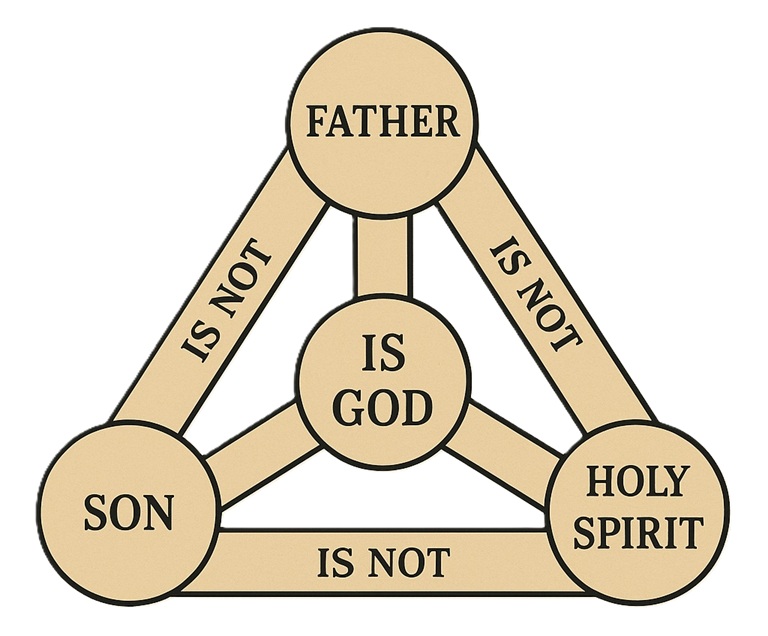
The definition is precise on the very point at issue. Lyons II and Florence: the Spirit proceeds from the Father and the Son not as from two principles but as from one principle, by one spiration. Ott grades the dogma: “The Holy Ghost proceeds from the Father and from the Son as from a Single Principle through a Single Spiration” — de fide. The Father remains the sole source without source; whatever the Son has, including His place in the Spirit’s procession, He has from the Father. Aquinas’s formula runs where the East could almost own it: the Spirit proceeds from the Father through the Son, the Son having it from the Father that the Spirit proceeds through Him. Two-sources theology is not what the West teaches. It is what the West condemns.1
The Scriptures Both Sides Share
The Spirit is “the Spirit of his Son” (Gal. 4:6); the Son sends Him — “whom I shall send to you from the Father” is the first clause of the very verse the East quotes (John 15:26); and the Son’s claim is total: “All that the Father has is mine; therefore I said that he will take what is mine and declare it to you” (John 16:14–15). If the Father’s “all” includes being source of the Spirit, the Son here says that this too is His — from the Father, which is exactly the Latin qualification. That is theological inference from the text, not a statement about eternal procession in so many words, and it is offered as such. The last page of Scripture draws the picture: “the river of the water of life… flowing from the throne of God and of the Lamb” (Rev. 22:1) — one river, one throne, two named from whom it flows.2
The Bridge the East Built
On the Catholic reading the Fathers divide by vocabulary more than by faith — a reading Orthodox theologians dispute, and offered here as the better account rather than a settled result: the Latins say “from the Father and the Son,” Augustine adding the balancing word the East requires — principally from the Father; the Greeks say “through the Son,” Cyril of Alexandria going as far as any Latin. The decisive witness is Maximus the Confessor, a saint of both calendars, who answered this very controversy in the seventh century: the Latins, he wrote to Marinus, do not make the Son a cause of the Spirit — they know one cause, the Father — and their formula intends what the Greek “through the Son” intends. The East’s own greatest theologian of the age judged the two grammars one faith, before the schism existed. The letter survives only in part and its scope is argued over — Orthodox readers hold that Maximus vindicated a Latin usage narrower than the later dogma — so it is a bridge, not a settlement.3
Two Verbs, One Mystery
Behind nine centuries of argument sit two verbs. The creed’s Greek ekporeuesthai names origination from an ultimate source — and used with that verb, the East is right: “and the Son” would make two fountainheads, and the Catholic Church would join in refusing it. The Latin procedere is broader, covering any relation of origin; said in Latin, the clause asserts no second source. The Vatican’s 1995 clarification, requested by John Paul II and addressed to the Orthodox, says so in as many words: the Father is the sole principle without principle, and the Filioque neither denies nor rivals the monarchy. And one standing fact says it louder than any document: the Eastern Catholic churches, in full communion with Rome, recite the creed today without the clause — with Rome’s blessing. The word is not required; the faith it protects is.4 Anselm supplies the positive case: the Persons are distinguished only by their relations of origin, so if the Spirit proceeded from the Father exactly as the Son does, nothing would distinguish Spirit from Son at all. The procession through the Son is what keeps the third Person third. That is a Western metaphysical argument, resting on the premise that the Persons are distinguished by relations of origin alone; the East is not obliged to accept the premise, since it distinguishes Son and Spirit by their distinct modes of origin from the Father alone — begetting and procession — without requiring any relation between them. It is offered as the Latin reason, not as a demonstration binding on both.
Why the West Added It
The clause was born as a defense, not a provocation: Toledo, 589, receiving a converting Arian kingdom — against those who denied the Son’s full divinity, confessing the Spirit’s procession from Him too guarded Christ’s equality with the Father. It spread with that purpose for four centuries before it touched the creed. This does not settle the procedural question, and this page does not pretend it does: who may touch the common creed is really the question of papal authority, argued on the apostolic succession page, and the Filioque could be reconciled tomorrow with that older question still standing. Serious Orthodox voices have themselves moved: Kallistos Ware, who once treated the clause as church-dividing, later judged the problem to lie more in semantics than in basic doctrine — a revision he made in print, and one this page’s whole argument commends.5
The panel’s two procedural texts deserve direct answers rather than deferral. Ephesus’s prohibition on composing “another creed” cannot mean that no council may ever touch the wording — the creed of 381 had itself expanded the creed of 325, adding whole clauses on the Holy Spirit; on the strict reading, Constantinople stood condemned by Ephesus fifty years before the canon was written, which no one holds. What the canon forbids is a rival faith, not a clarifying word within the same faith — and whether the Filioque is the one or the other is exactly the doctrinal question the earlier sections argue. As for the synod of 879: its own standing is, as the Protestant panel’s note concedes, itself disputed between the communions. A council whose authority is part of what the two sides disagree about cannot arbitrate the disagreement; to cite it as decisive is to assume the very ecclesiology it is offered to prove.
The creed confesses the Spirit as Lord and giver of life. A
dispute conducted for nine centuries about His procession,
largely in His absence, is one both sides should be glad to lay
down — and the materials for laying it down were written
by a Greek saint thirteen centuries ago.
This is the concise case. The full essay adds the history of the clause’s entry into the creed, the patristic witnesses on both sides, the 1995 clarification’s argument in detail, and complete documentation. It is available as a Word document at the end of this page.
Endnotes
- Ludwig Ott, Fundamentals of Catholic Dogma, trans. Patrick Lynch (1955; TAN reprint, 1974), quoting Lyons II (1274) and Florence (1439). The conciliar text is Lyons II, Constitution II: the Holy Spirit “proceeds eternally from the Father and the Son, not as from two principles, but as from one principle; not by two spirations, but by one single spiration.” Aquinas, Summa Theologiae I, q. 36, a. 4, on the Father and the Son as one principle of the Holy Spirit; a. 3 treats procession “through the Son.” ↩
- Galatians 4:6; John 15:26; John 16:14–15; Acts 2:33; Revelation 22:1, RSV. ↩
- Augustine, De Trinitate XV.17.29, where he explains the qualifier: God the Father alone is He “from whom the Word is born, and from whom the Holy Spirit principally proceeds. And therefore I have added the word principally, because we find that the Holy Spirit proceeds from the Son also” — and again at XV.26.47 (Nicene and Post-Nicene Fathers translation, read free at New Advent); Cyril of Alexandria’s usage and Theodoret’s challenge, from the standard collections; Maximus the Confessor, Letter to Marinus (c. 645–646), summarized rather than quoted — the letter survives in part and translations vary. ↩
- Pontifical Council for Promoting Christian Unity, The Greek and Latin Traditions Regarding the Procession of the Holy Spirit, published in L’Osservatore Romano, 13 September 1995 (English weekly edition, 20 September 1995, 3), at the request of John Paul II. ↩
- Ware’s revised judgment is summarized rather than quoted, per this site’s practice when a primary text has not been verified; it revises the position of The Orthodox Church (1963). ↩