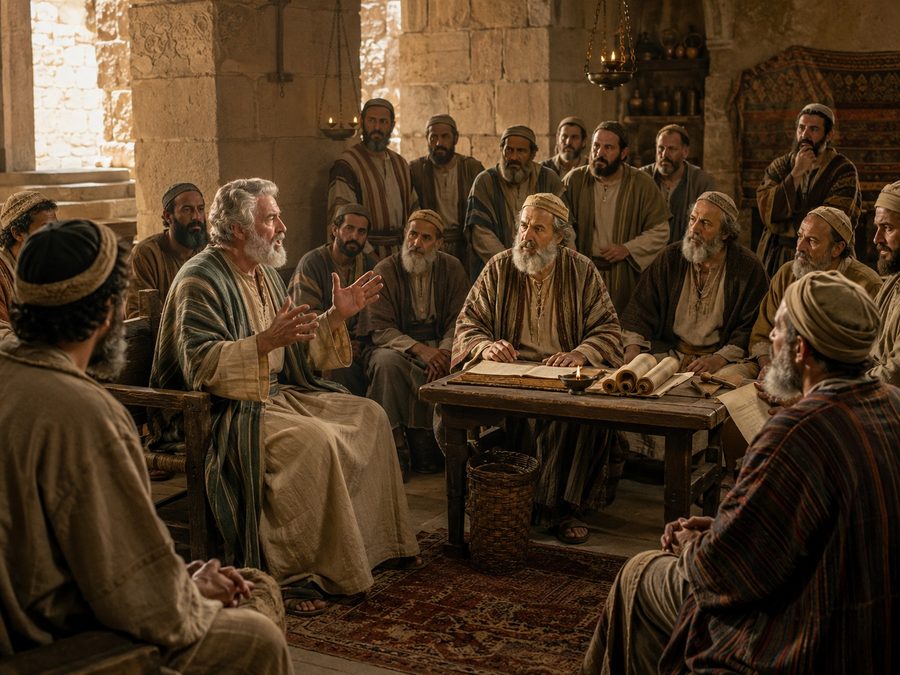
Reception is real, and Catholic teaching affirms it: a true
council is received, and the Church’s embrace
of Nicaea is part of Nicaea’s glory. The Catholic
objection is not to reception as a fact. It is to reception
as a criterion — because a criterion must be
usable when it is needed, and reception, by its nature,
answers only after the crisis is over. Nor is the Catholic
answer a single mechanism either: first-millennium ecumenicity
involved imperial convocation, the participation of the great
sees, doctrinal reception and Roman confirmation in varying
combinations, and the modern dialogue describes primacy and
synodality as interdependent rather than rival. The claim here is
narrower — that among those factors, Roman confirmation is
the one no council counted as ecumenical has lacked.
A Criterion That Arrives Too Late
Put yourself in the year 360. The twin councils of Ariminum
and Seleucia — between them far larger than Nicaea
— have just subscribed a compromised creed;
“the whole world groaned,” Jerome wrote of that
moment, “and was astonished to find itself
Arian.” The reception test can tell the Christians of
360 nothing: reception is precisely what the Arians appear,
at that moment, to have won. What actually held the line was
not a poll of the churches but particular sees and bishops
— Athanasius in exile, and Rome — refusing
assemblies that had every conciliar credential except the
right faith and the right communion. Reception, to be fair,
is not one thing — it can be episcopal, liturgical,
popular, and gradual — but every form of it shares
one limit: it reports the outcome, and cannot adjudicate
the crisis. A criterion that can only ratify the winner
centuries later is not a criterion; it is a history
written by one.1
The Test the Fifth Century Ran
The fifth century staged the experiment twice in three
years, holding every variable but one. Ephesus, 449: an
emperor convoked it, the great Eastern sees attended, the
numbers were ample — and it enthroned heresy by
violence. Chalcedon, 451: an emperor convoked it too, and
the same churches attended. The one variable that flipped
was Rome. Leo repudiated the first assembly —
latrocinium, a robbery, his name for it stuck to
it permanently — and his legates presided at the
second, which deposed the first council’s president
and asked Leo to confirm its acts. Every mark the reception
theory points to — imperial summons, patriarchal
attendance, majority vote — the Robber Council
possessed. What it lacked was Peter. That difference,
more than any other, is why one assembly is a byword and the other is the Fourth
Ecumenical Council.2
Reception Proves Too Much
Apply the reception test consistently and it dismantles the
very councils it is meant to certify. Chalcedon was
not received by the whole Church: the churches of
Egypt, Armenia, and much of Syria — a vast portion of
the Christian world of 451 — rejected it permanently,
and their heirs reject it still. The Orthodox do not
conclude that Chalcedon failed of ecumenicity; they
conclude, rightly, that the non-receivers were wrong. But
that answer gives the game away: it measures reception by
the true Church, and identifies the true Church as
the one that received the true councils. The circle is
perfect, and it is a circle — the same one this site
examines in the sola-scriptura debate, where a canon of
books needs a canonizer. A canon of councils does
too.3
Constantinople and Florence, Read Closely
The two Orthodox exhibits are stronger as questions than as
proofs. Constantinople, 381, was indeed an Eastern synod
— and for seventy years it was reckoned exactly that.
It entered the Church’s canon of councils when
Chalcedon, meeting under Roman presidency, read and
confirmed its creed — while Rome went on resisting its
third canon. That is not reception operating instead of
ratification; it is ratification operating with precision,
keeping the council’s faith and declining its
politics. Florence proves a different point than the one
claimed: Catholics do not hold that ratification compels
assent on the ground, and the East’s repudiation of a
union its own delegates signed shows what it shows —
that a true council can be refused, as Chalcedon was refused
by Egypt. Refusal is a fact about the refusers. It is not
evidence that nothing binding happened.4
A Canon Needs a Canonizer
The bare list is the quiet argument. No council ever defined
the list of councils; the Orthodox seven is fixed by
— what, exactly? Not by a council, on pain of regress;
not by unanimous reception, which Chalcedon never had. The
Catholic answer is at least an answer: the councils bind
that the successor of Peter confirms, which is why the
fifth century could know 449 from 451 in real time, and why
the Church has never counted as ecumenical any council Rome
rejected. The record does not entail the Catholic doctrine
of the papacy — history rarely entails — but it
best supports it: every alternative criterion either
arrives too late, proves too much, or smuggles in the very
authority it set out to replace. How Rome and the East are
talking about all this now is taken up on
the Great Schism page.5
The full essay walks the whole record — Jerusalem
to Nicaea, the Arian councils, 449 and 451 side by side,
Constantinople’s path into the canon, the
non-reception of Chalcedon, Florence, and the two
communions’ lists — with the Orthodox
reading given first at each step. Download it from the
summary below — and the comments are open,
without your name if you prefer.
Endnotes
- Jerome, Dialogue Against the Luciferians 19, on the aftermath of Ariminum (359): “The whole world groaned, and was astonished to find itself Arian.” ↩
- Leo, Letter 95, calling Ephesus II a latrocinium; Acts of Chalcedon, sessions 1–3, for the legates’ presidency and the deposition of Dioscorus; the council’s letter to Leo requesting confirmation. See the first-millennium page for Chalcedon read whole. ↩
- The Oriental Orthodox communions — Coptic, Armenian, Syriac, Ethiopian — reject Chalcedon to this day. On the canon-of-Scripture parallel, see the sola scriptura page. ↩
- Constantinople I’s creed read and confirmed at Chalcedon; Rome’s long resistance to canon 3. Council of Ferrara–Florence, union decree of 6 July 1439, and its subsequent repudiation in the East. ↩
- The Orthodox count seven councils; the Catholic Church twenty-one. No conciliar decree of either communion defines its list. ↩