Is the New World Translation Accurate?

New World Translation

"So also our beloved brother Paul wrote to you according to the wisdom given him, speaking of this as he does in all his letters. There are some things in them hard to understand, which the ignorant and unstable twist to their own destruction, as they do the other scriptures."

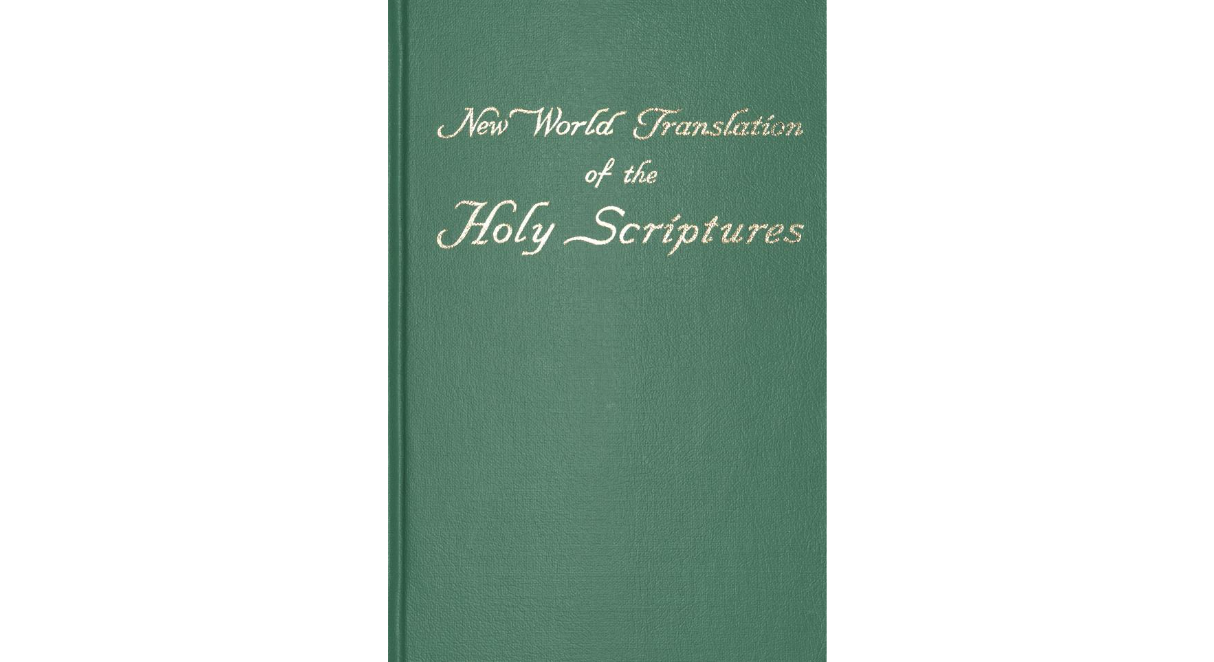
Jehovah's Witnesses read a Bible of their own — the New World Translation , produced by the Watch Tower Society and used by Witnesses almost to the exclusion of every other version. They present it as the most accurate English Bible ever made: a faithful, literal rendering from the original Hebrew, Aramaic, and Greek, with God's name “Jehovah” restored to its rightful place.
But is it? A translation should be judged not by whether we like its theology, but by whether it renders the original text honestly — and whether the translators' own stated rules are applied evenly, rather than bent wherever the text resists a cherished doctrine. By that fair standard, the New World Translation runs into serious trouble: at John 1:1 (“the Word was a god ”), at Colossians 1:16 (“all [other] things”), and at a long train of verses touching the deity of Christ, the personhood of the Holy Spirit, and the sacraments.
Let's put the translation on trial — by its own rules, and by the verdict of scholars across the traditions — and see ...
  • Is the New World Translation an honest rendering of the Bible, or a system of belief dressed as a translation?
I invite your engagement with me on these questions. You may leave comments below, but please be sure to read our policy on commenting before doing so.

Watchtower View

Jehovah's Witnesses regard the New World Translation of the Holy Scriptures (NWT) as the most accurate and trustworthy English Bible available, and use it almost exclusively. They present it not as a sectarian paraphrase but as a faithful, largely literal rendering made directly from the original languages.

What They Affirm

A translation from the original languages. The Watchtower describes the NWT as “a translation of the Holy Scriptures made directly from Hebrew, Aramaic, and Greek into modern-day English by a committee of anointed witnesses of Jehovah,” who felt a “special responsibility to transmit his thoughts and declarations as accurately as possible.” For the Hebrew text they used Kittel's Biblia Hebraica; for the Greek, the text of Westcott and Hort.1

Accurate and consistent, not paraphrased. The translation committee stated its aim as “as literal a translation as possible where the modern English idiom allows,” assigning “to each major word… one meaning” and holding to it as far as context permitted. On this basis Witnesses hold that the NWT is more consistent and less doctrinally colored than the traditional versions, which (they argue) import the creeds of “Christendom” into the text.2

The divine name restored. The feature Witnesses prize most is the restoration of God's personal name, “Jehovah,” to the Scriptures — 6,973 times in the Hebrew Scriptures and 237 times in the Christian Greek Scriptures. They argue that the name stood in the original Hebrew, that the New Testament writers (and Jesus himself) used it when quoting the Hebrew Scriptures, and that an apostate Church later removed it in favor of “Lord,” obscuring the distinction between Jehovah and his Son.3

Anonymous, that God may receive the glory. The translation committee chose to remain anonymous, the Watchtower says, because “it is the truth rather than its servant that should be honored.” The translators “did not seek prominence for themselves,” wishing the credit to go to the Divine Author rather than to men. The Society notes that some other versions (such as the New American Standard Bible) likewise do not name their translators.4

Endorsed, they say, by scholars. The Watchtower cites a number of scholars and reviewers — among them Edgar Goodspeed, Alexander Thomson, Benjamin Kedar, Jason BeDuhn, and others — whom it presents as praising the NWT's accuracy, and points to grammarians and translations it reads as supporting its rendering “a god” at John 1:1.5

The Reply in Brief

The Catholic and broadly scholarly reply is developed in the Catholic View panel and set out point by point in the Summary panel below, with the full exposition in the essay downloadable there. In brief: the NWT's translators were anonymous and — but for one self-taught man, who could not translate Genesis 2:4 into Hebrew under oath — untrained in the biblical languages; its signature rendering “a god” (John 1:1) rests on a grammatical rule the translators themselves follow only about six percent of the time, and abandon wherever it would prove inconvenient; it inserts words the authors never wrote (“other” in Colossians 1:16) and changes words they did (“obeisance” for “worship,” “I have been” for “I am,” “cutting-off” for “punishment”), always on the side of Watchtower doctrine; it inserts “Jehovah” where no Greek manuscript contains it, and only where the referent is not Jesus; and the scholars it parades in its defense — Mantey, Barclay, Dodd, and the rest — protested, in writing, that they had been quoted to mean the opposite of what they said.


Endnotes
  1. “New World Translation,” in Reasoning From the Scriptures (Watch Tower Bible and Tract Society, 1985), 276–277, and the foreword to the Kingdom Interlinear Translation of the Greek Scriptures. As the basis for the Hebrew Scriptures the committee used Rudolf Kittel's Biblia Hebraica (1951–1955 editions); for the Christian Greek Scriptures, the Westcott and Hort text (1881).
  2. The committee's stated principles appear in the foreword to the Kingdom Interlinear Translation (1969 and 1985 eds.), pp. 9–10: “We offer no paraphrase of Scripture…. To each major word we have assigned one meaning and have held to that meaning as far as context permitted.” The claim that the NWT is uniquely consistent and free of creedal bias recurs throughout the Society's literature.
  3. On the restoration of the divine name, see The Divine Name That Will Endure Forever (Watch Tower, 1984) and the appendix to the Kingdom Interlinear Translation. The Society appeals in part to the work of George Howard on the Tetragrammaton in the Septuagint — though Howard himself wrote that his theory was unproven and that the Witnesses' use of it “goes beyond the evidence” and was “designed to support JW theology.”
  4. The appeal to anonymity and the quotation of C. T. Russell (“It is the truth rather than its servant that should be honored”) appear in Awake!, October 22, 1989, 20, and Reasoning From the Scriptures, 277. Under oath in 1954, Frederick Franz put it more bluntly when asked who the translators were: “That is an absolute secret.”
  5. For the Watchtower's roster of supporting scholars and translations, see the appendix to the Kingdom Interlinear Translation (1985), the NWT 1984 Appendix 6A, and Awake!, March 22, 1987, 10–14. As the Catholic View panel documents, most of these scholars, read in context, do not support the NWT's renderings — and several (Mantey, Barclay, Dodd, ten Kate, Howard) said so explicitly, some in letters of protest to the Society.

Catholic View

© 2026 Richard Whiting. All rights reserved. May be reproduced in whole, with attribution. See the full notice at the end of this article.

I. A Bible of Its Own

Almost every religious group reads the Bible. Jehovah's Witnesses are nearly unique in reading a Bible of their own — the New World Translation of the Holy Scriptures, produced by the Watch Tower Society between 1950 and 1961 and revised several times since. The Watchtower presents it as “a translation of the Holy Scriptures made directly from Hebrew, Aramaic, and Greek into modern-day English by a committee of anointed witnesses of Jehovah,” who felt a “special responsibility to transmit his thoughts and declarations as accurately as possible.” It is, they say, accurate, faithful, and largely literal — not a loose paraphrase, but the Word of God restored to clarity, complete with the divine name “Jehovah” returned to its rightful place.1

That is a large claim, and it deserves a fair hearing rather than a reflexive dismissal. A translation should be judged not by whether we like its theology but by whether it renders the original text honestly — whether, where the Greek or Hebrew is plain, the English is faithful to it, and whether the translators' stated rules are applied evenly rather than bent to a purpose. This essay takes the New World Translation seriously enough to hold it to exactly that standard. The question is not whether the NWT agrees with Catholic doctrine. The question is narrower and fairer: is it an honest translation, or a system of belief dressed in the clothing of a translation?

The answer, on the evidence, is the second. Again and again — and, as we shall see, by its own rules — the New World Translation alters the text precisely where the text contradicts the doctrines of the Watchtower, and leaves it alone where it does not. That is not the signature of translation. It is the signature of revision in the service of a system.

II. Who Were the Translators?

A translation from the original languages is only as trustworthy as the competence of those who made it — which is why every major modern version names its translators and lists their credentials, and why scholars from different traditions are deliberately mixed on a committee, so that each may check the others. The New World Translation is different. Its translators were kept anonymous, and the Watch Tower has never, to this day, released their names or qualifications, even on request. The stated reason is humility — that God, not men, should receive the glory. Whatever the motive, the effect is that the public could not examine the translators' competence, and the translators could not be held to account for their errors.2

We nevertheless know who they were, because former insiders disclosed it. The committee consisted of Nathan Knorr, Frederick Franz, Albert Schroeder, George Gangas, and Milton Henschel. Of these five, by the testimony of Raymond Franz — a former member of the Governing Body and Frederick's own nephew — only Frederick Franz had any real claim to the biblical languages, and his was thin: two years of classical (not biblical) Greek at the University of Cincinnati, which he left after his sophomore year, and Hebrew that was entirely self-taught. The other four had no training in Hebrew, Aramaic, or Greek at all.3

How thin that competence was became a matter of public record in 1954, when Franz testified under oath in a Scottish courtroom. He affirmed that he could read and follow Hebrew. The next day he was asked to do something simple — to translate the words of Genesis 2:4 into Hebrew. He declined: “No, I won't attempt to do that.” It is the kind of exercise a second-year seminary student performs without difficulty. The man identified as the principal translator of the Society's Bible could not, or would not, do it. “To all intents and purposes,” writes the historian (and former Witness) James Penton, “the New World Translation is the work of one man — Frederick Franz.”4

None of this, by itself, proves a single verse mistranslated. A self-taught man can sometimes outwork a credentialed one, and an argument from credentials can be a distraction. But it raises the natural question, and the rest of this essay answers it from the text itself: when we open the New World Translation to the verses that matter most, do we find the work of careful translators following the evidence — or of a committee following a doctrine?

III. The Test Case: “a god” in John 1:1

No verse is more revealing than the first. Where every standard translation — Catholic, Protestant, and otherwise — reads “and the Word was God,” the New World Translation alone reads “and the Word was a god” (John 1:1). The stakes are obvious: “the Word was God” affirms the deity of Christ; “the Word was a god” denies it, and — as Bruce Metzger observed — implies a polytheism of a greater God and a lesser one.5

The Watchtower's entire grammatical case rests on a single observation: in the clause kai theos ēn ho logos, the word theos (“God”) lacks the definite article “the.” From this absence they reason that the noun is indefinite and must be rendered “a god.” Now Greek has no indefinite article (“a” or “an”); whether to supply one in English is a judgment the translator makes. So the question is whether the absence of the article here really signals an indefinite “a god.” And on that question the grammarians — including those the Watchtower itself cites — are nearly unanimous against the NWT.

There are sound reasons the article is absent that have nothing to do with indefiniteness. In Greek, word order does not assign subject and predicate as it does in English; the article is one of the ways a writer marks which noun is the subject. John put the article on logos (“the Word”) to mark it as the subject, and left it off theos (the predicate) precisely so the two would not be read as simply interchangeable. Had he written the article on both, he would have said the Word was the whole of God, to the exclusion of the Father — the ancient error of modalism. The anarthrous theos, placed emphatically before the verb, tells us the Word is fully divine in nature while remaining personally distinct from the Father. That is the historic Christian reading, and it is what the grammar actually supports.

IV. Judged by Its Own Rule

The decisive objection, however, is not that the Watchtower's rule is debatable. It is that the Watchtower does not follow it. If “no article” really meant “indefinite,” the rule would have to apply throughout. It does not — not even within the same paragraph.

The scholar Robert Countess put the matter to the test. Across the New Testament the word theos appears without the article 282 times. The New World Translation renders it “a god,” “god,” “gods,” or “godly” in just sixteen of them — about six percent — and translates the other ninety-four percent “God.” In the prologue of John alone, the very passage in question, theos stands without the article in verses 6, 12, 13, and 18, and the NWT renders every one of them “God” — except 1:1c, where, and only where, doctrine demands “a god.” A rule applied six percent of the time, and at the convenient places, is not a rule. It is a pretext.6

Daniel Wallace, in the standard intermediate Greek grammar, makes the same point from the other side. If the NWT applied its principle honestly to the prologue, it would have to read “in a beginning” (archē, anarthrous, 1:1), “the Word was a life” (zōē, 1:4), a man sent “from a god” (para theou, 1:6), whose name was “a John” (Iōannēs, 1:6). The NWT renders none of these with “a.” “One can only suspect,” Wallace concludes, “strong theological bias in such a translation.”7

Most damaging of all is the testimony of the Watchtower's own witness. To support “a god,” the Society quoted the grammar of Julius Mantey. When Mantey saw how he had been used, he wrote to the Watch Tower directly: “You quoted me out of context…. [I]t is neither scholarly nor reasonable to translate John 1:1 ‘The Word was a god.’ Word order has made obsolete and incorrect such a rendering…. The evidence appears to be 99% against them.” He asked for a public retraction. The grammarian the Watchtower called as its expert testified, in effect, for the other side — and the verdict of the wider scholarly world has been just as severe.8

That verdict is worth hearing plainly, if only because the Watchtower so often presents the NWT as scholarly. Bruce Metzger of Princeton: “a frightful mistranslation,” “erroneous,” “pernicious,” “reprehensible.” William Barclay: “intellectually dishonest.” H. H. Rowley: “a shining example of how the Bible should not be translated… an insult to the Word of God.” These are not Catholic apologists; they are mainstream scholars of the Greek and Hebrew text, and their judgment is not isolated but representative.9

V. The Word They Added

If John 1:1 shows the NWT bending a rule, Colossians 1:16–17 shows it adding to the text outright. Paul writes that in Christ “all things were created… all things have been created through him and for him. And he is before all things.” The point is unmistakable: Christ is the Creator of all things, which is to say he is God, for “he that constructed all things is God” (Heb. 3:4). The New World Translation cannot allow this, since it holds that Christ is himself a created being. So it inserts a word: “all [other] things.” Now Christ is merely the first creature, who then made all the other things — a different claim entirely, and the precise claim the Watchtower needs.10

There is no word for “other” (allos) in the Greek. The translators know this — which is why, in later editions, they enclosed the inserted word in brackets. But the most telling detail is historical: in the first (1950) edition the word “other” was printed without brackets, as though it belonged to the text, and the brackets appeared only afterward, when scholars objected. The Greek scholar Robert Reymond calls the insertion “sheer theological perversity.” A translation that must add a word the author did not write, in order to reverse the meaning of what he did write, has stopped translating.

VI. The Words They Changed

Once the pattern is seen, it appears throughout, always running in the same direction. A few examples stand for many.

“Worship” becomes “obeisance” — but only for Jesus. The Greek proskuneō is one word; the NWT renders it “worship” when its object is the Father, and “do obeisance” every time its object is the Son (Matt. 14:33; Heb. 1:6). The word did not change; only the doctrine did. And again the seam shows: earlier editions had Jesus “worshipped” at Hebrews 1:6, until the 1971 revision changed it.11

“I am” becomes “I have been.” At John 8:58 Jesus says egō eimi, “I am” — the words God speaks from the burning bush in Exodus 3:14. The NWT renders the same phrase “I am” everywhere else in John, and only here changes it to “I have been,” dissolving the allusion to the divine name. Yet the crowd's reaction — they pick up stones to kill him for blasphemy (8:59) — makes sense only on the reading the NWT has erased.12

“Eternal punishment” becomes “everlasting cutting-off.” At Matthew 25:46 the NWT avoids the doctrine of eternal punishment by rendering kolasis as “cutting-off” — a meaning no lexicon assigns the noun, which means “punishment.” The Society defends the move by defining a different, related word, the root verb, and reading its meaning back in: a textbook etymological fallacy.13

“Our great God and Savior” becomes two persons. At Titus 2:13 and 2 Peter 1:1, a fixed rule of Greek syntax (Granville Sharp's rule) joins “God” and “Savior” as titles of one person, Jesus Christ — as some eighty parallel constructions confirm without exception. The NWT splits the one figure into two, but only here, where the undivided reading would call Jesus God.14

And the Holy Spirit is depersonalized throughout. “The Spirit of God” becomes “God's active force” (Gen. 1:2); the Spirit's personal pronoun “he” becomes “it” (John 14:17); “as he determines” becomes “as it wills” (1 Cor. 12:11) — a steady recasting of a Person into a thing, to match the doctrine that the Spirit is not a Person.15

Other adjustments are quieter but cut the same way: the plain “in” Christ becomes “in union with” Christ in dozens of places, weakening the New Testament's language of mystical indwelling; and at the Last Supper “This is my body” becomes “This means my body,” quietly removing the Real Presence, though the Greek estin simply means “is.” No one of these, perhaps, would prove a case. Taken together, all pulling in one direction — always away from the deity of Christ, the personhood of the Spirit, and the sacraments — they reveal a method.16

VII. The Comma They Moved

One last example shows that the method does not even need a Greek word to work on; a single comma will do. As the thief is dying beside him, Jesus answers his plea with a promise. The New World Translation prints it this way (Luke 23:43): “Truly I tell you today, you will be with me in Paradise.” Every other translation I know of — the Revised Standard Version Catholic Edition among them — punctuates it differently: “Truly I say to you, today you will be with me in Paradise.” Notice where the comma falls. The NWT places it after “today”; everyone else places it before.

The difference is not trivial; it is the whole point. In the original manuscripts there were no commas at all — no punctuation, no chapters, no verses; these were all added many centuries later. So the comma is the translator's decision, and the NWT's decision is doctrinally convenient. If the promise is “today you will be with me in Paradise,” then the thief is with Christ that very day, and the soul survives bodily death — which the Watchtower denies. Move the comma one word to the right, and the sentence becomes merely “I am telling you this today,” and the promise of Paradise is pushed off to some indefinite future. The comma is doing the work that the doctrine requires.17

But here the NWT collides with the plain habit of Jesus' own speech. “Truly I tell you” is one of his most characteristic expressions, recorded some seventy-six times across the four Gospels — and not once, anywhere else, does he expand it to “truly I tell you today.” The addition would be pointless: no one listening could have imagined he was making the promise yesterday, or would make it tomorrow. The phrase is always simply “Truly I tell you,” followed by what is promised. At Luke 23:43 the NWT breaks a pattern the Gospels keep seventy-six times over — and breaks it at exactly the verse where the unbroken reading would contradict Watchtower teaching on the soul. What Jesus said was, “Truly I tell you, today you will be with me in Paradise.”

Click here to see all the Gospel verses where Jesus uses the expression “Truly I tell you ...”:
  • Matthew 5:18For truly I say to you, till heaven and earth pass away, not an iota, not a dot, will pass from the law until all is accomplished.
  • Matthew 5:26truly I say to you, you will never get out till you have paid the last penny.
  • Matthew 6:2Truly I say to you, they have their reward.
  • Matthew 6:5Truly I say to you, they have their reward.
  • Matthew 6:16Truly I say to you, they have their reward.
  • Matthew 8:10… “Truly I say to you, not even in Israel have I found such faith.”
  • Matthew 10:15Truly I say to you, it shall be more tolerable on the day of judgment for the land of Sodom and Gomorrah than for that town.
  • Matthew 10:23… for truly I say to you, you will not have gone through all the towns of Israel, before the Son of man comes.
  • Matthew 10:42truly I say to you, he shall not lose his reward.
  • Matthew 11:11Truly I say to you, among those born of women there has arisen no one greater than John the Baptist …
  • Matthew 13:17Truly I say to you, many prophets and righteous men longed to see what you see …
  • Matthew 16:28Truly I say to you, there are some standing here who will not taste death before they see the Son of man coming in his kingdom.
  • Matthew 17:20… For truly I say to you, if you have faith as a grain of mustard seed …
  • Matthew 18:3Truly I say to you, unless you turn and become like children, you will never enter the kingdom of heaven.”
  • Matthew 18:13And if he finds it, truly I say to you, he rejoices over it more than over the ninety-nine that never went astray.
  • Matthew 18:18Truly I say to you, whatever you bind on earth shall be bound in heaven …
  • Matthew 19:23Truly I say to you, it will be hard for a rich man to enter the kingdom of heaven.”
  • Matthew 19:28Truly I say to you, in the new world, when the Son of man shall sit on his glorious throne …”
  • Matthew 21:21Truly I say to you, if you have faith and never doubt …”
  • Matthew 21:31Truly I say to you, the tax collectors and the harlots go into the kingdom of God before you.”
  • Matthew 23:36Truly I say to you, all this will come upon this generation.
  • Matthew 24:2Truly I say to you, there will not be left here one stone upon another …
  • Matthew 24:34Truly I say to you, this generation will not pass away till all these things take place.
  • Matthew 24:47Truly I say to you, he will set him over all his possessions.
  • Matthew 25:12Truly I say to you, I do not know you.’
  • Matthew 25:40Truly I say to you, as you did it to one of the least of these my brethren, you did it to me.’
  • Matthew 25:45Truly I say to you, as you did it not to one of the least of these, you did it not to me.’
  • Matthew 26:13Truly I say to you, wherever this gospel is preached in the whole world …
  • Matthew 26:21Truly I say to you, one of you will betray me.”
  • Matthew 26:34Truly I say to you, this very night, before the cock crows, you will deny me three times.”
  • Mark 3:28Truly I say to you, all sins will be forgiven the sons of men …”
  • Mark 8:12Truly I say to you, no sign shall be given to this generation.
  • Mark 9:1Truly I say to you, there are some standing here who will not taste death …”
  • Mark 9:41For truly I say to you, whoever gives you a cup of water to drink … will by no means lose his reward.
  • Mark 10:15Truly I say to you, whoever does not receive the kingdom of God like a child shall not enter it.
  • Mark 10:29Truly I say to you, there is no one who has left house or brothers or sisters …”
  • Mark 11:23Truly I say to you, whoever says to this mountain, ‘Be taken up and cast into the sea,’ …
  • Mark 12:43Truly I say to you, this poor widow has put in more than all those …”
  • Mark 13:30Truly I say to you, this generation will not pass away before all these things take place.
  • Mark 14:9And truly I say to you, wherever the gospel is preached in the whole world …
  • Mark 14:18Truly I say to you, one of you will betray me, one who is eating with me.”
  • Mark 14:25Truly I say to you, I shall not drink again of the fruit of the vine …
  • Mark 14:30Truly I say to you, this very night, before the cock crows twice, you will deny me three times.”
  • Luke 4:24Truly I say to you, no prophet is acceptable in his own country.”
  • Luke 9:27But I tell you truly, there are some standing here who will not taste death …
  • Luke 12:37truly I say to you, he will put on his apron and have them sit at table …
  • Luke 12:44Truly I tell you, he will set him over all his possessions.
  • Luke 18:17Truly I say to you, whoever does not receive the kingdom of God like a child shall not enter it.
  • Luke 18:29Truly I say to you, there is no man who has left house or wife or brothers or parents or children …”
  • Luke 21:3Truly I tell you, this poor widow has put in more than all of them …”
  • Luke 21:32Truly I say to you, this generation will not pass away till all has taken place.
  • Luke 23:43And he said to him, “Truly I say to you, today you will be with me in Paradise.”
  • John 1:51“Truly, truly I say to you, you will see heaven opened …”
  • John 3:3“Truly, truly I say to you, unless one is born anew, he cannot see the kingdom of God.”
  • John 3:5“Truly, truly I say to you, unless one is born of water and the Spirit …”
  • John 3:11Truly, truly I say to you, we speak of what we know …
  • John 5:19“Truly, truly I say to you, the Son can do nothing of his own accord …”
  • John 5:24Truly, truly I say to you, he who hears my word and believes him who sent me, has eternal life …
  • John 5:25“Truly, truly I say to you, the hour is coming, and now is …”
  • John 6:26“Truly, truly I say to you, you seek me, not because you saw signs …”
  • John 6:32“Truly, truly I say to you, it was not Moses who gave you the bread from heaven …”
  • John 6:47Truly, truly I say to you, he who believes has eternal life.
  • John 6:53“Truly, truly I say to you, unless you eat the flesh of the Son of man …”
  • John 8:34“Truly, truly I say to you, every one who commits sin is a slave to sin.”
  • John 8:51Truly, truly I say to you, if any one keeps my word, he will never see death.
  • John 8:58“Truly, truly I say to you, before Abraham was, I am.”
  • John 10:1“Truly, truly I say to you, he who does not enter the sheepfold by the door …”
  • John 10:7“Truly, truly I say to you, I am the door of the sheep.”
  • John 12:24Truly, truly I say to you, unless a grain of wheat falls into the earth and dies …
  • John 13:16Truly, truly I say to you, a servant is not greater than his master …
  • John 13:20Truly, truly I say to you, he who receives any one whom I send receives me …
  • John 13:21“Truly, truly I say to you, one of you will betray me.”
  • John 13:38“Truly, truly I say to you, the cock will not crow, till you have denied me three times.”
  • John 14:12“Truly, truly I say to you, he who believes in me will also do the works that I do …”
  • John 16:20Truly, truly I say to you, you will weep and lament, but the world will rejoice …
  • John 16:23… Truly, truly I say to you, if you ask anything of the Father, he will give it to you in my name.
  • John 21:18Truly, truly I say to you, when you were young, you fastened your own belt …
Close
VIII. The Name They Inserted

The New World Translation's most distinctive feature is the one the Watchtower is proudest of: it puts the name “Jehovah” into the New Testament 237 times. Here a word of fairness is owed. The desire to honor God's revealed name is not wrong, and in the Old Testament, where the Hebrew name genuinely stands, no Catholic need object to rendering it “Jehovah” or “Yahweh”; older Catholic and Protestant Bibles sometimes did. If the issue were only reverence for the name, there would be little to discuss.18

But that is not the issue. The New Testament authors, writing under inspiration, did not use the Hebrew name; where they quote even the most sacred Old Testament texts, they write the Greek kyrios, “Lord.” Not one of the thousands of surviving Greek manuscripts of the New Testament contains the Tetragrammaton. The Watchtower has inserted a word the inspired authors did not write.

And it has inserted it selectively. The substitution of “Jehovah” for “Lord” is made when the referent is taken to be the Father — but never in the roughly four hundred places where “Lord” is applied to Jesus. The rule is thus built to produce its own conclusion: it manufactures, in English, a clean separation between “Jehovah” and Jesus that the Greek does not make. The seam shows wherever the New Testament applies an Old Testament “Jehovah” text to Christ. Paul writes that “everyone who calls on the name of the Lord will be saved” (Rom. 10:13), quoting Joel's “name of Jehovah” — but here the NWT cannot read “Jehovah” without making Jesus Jehovah, so its own rule is quietly suspended. The tool that was built to divide Father from Son breaks in the one place it would unite them.19

IX. The Scholars They Quoted

Faced with the near-unanimity of scholarship against it, the Watchtower has assembled a list of authorities who, it says, support the NWT — and especially its “a god” at John 1:1. It is an impressive-looking list. It does not survive examination. When the cited scholars are read in context, the great majority turn out to say the opposite of what they are quoted as saying.20

We have already met Julius Mantey, who demanded a retraction. The pattern repeats. William Barclay's words were trimmed to make him appear to deny Christ's deity; he wrote afterward that “the Watchtower article has, by judicious cutting, made me say the opposite of what I meant to say.” C. H. Dodd is quoted as granting that “a god” “cannot be faulted” as a word-for-word rendering — with his very next sentence omitted, in which he calls it “unacceptable” because “it runs counter to the current of Johannine thought.” Others on the list are not New Testament scholars at all but nineteenth-century Unitarians and Christadelphians who denied Christ's deity on principle — and even one of those, Benjamin Wilson, actually rendered the verse “the Word was God” in his main text. The list is not evidence of scholarly support. It is evidence of how far one must go to manufacture the appearance of it.

The same willingness to use a tainted source for a desired result appears in the strange episode of Johannes Greber. For years the Watchtower cited Greber's translation in support of “a god” — a man who was, by his own account, a spiritist medium, and who said his New Testament had been produced with the help of the “spirit world” speaking through his wife. The Watchtower knew this as early as 1956, and went on quoting him until 1983, when it abruptly dropped him as “improper” to cite. A translation confident in its own grammar does not need the help of mediums.21

X. What the Catholic Owes the Word of God

It would be easy, after all this, to treat the Bible merely as a weapon — to score the verses and move on. That would miss the deeper point, and it would be unworthy of the subject. The Catholic Church holds the Scriptures in the highest reverence: they are the inspired Word of God, written by human authors whom the Holy Spirit moved, and the Church venerates them, in the words of the Second Vatican Council, as she venerates the Body of the Lord. To love the Scriptures is to want them rendered faithfully — to want the text to speak, even when, especially when, it says what we did not expect.22

That is finally why the New World Translation is so serious a matter, and not merely a curiosity. A translation engineered to defend a system has reversed the proper order. Instead of submitting belief to the Word of God, it bends the Word of God to a belief. The honest path, when Scripture contradicts what we hold, is to change what we hold — not to change the Scripture. The New World Translation took the other path, and took it deliberately, edition after edition, smoothing away each verse that resisted as the objections came in.

For the individual Witness this has a cost that is not academic. Told that the New World Translation is the one reliable Bible and every other a product of “Christendom,” he is sealed inside a text that has been quietly adjusted at exactly the points where it would otherwise challenge what he has been taught. He reads, in good faith, a Bible built so that it cannot correct him. The kindest thing one can do is what this essay has tried to do: set the NWT beside the Greek and the Hebrew, and beside the honest verdict of scholars across the traditions, and let the seams show.

XI. Conclusion: A Translation on Trial

Put the New World Translation on trial by its own standards, and the case proves itself. Its translators were anonymous and, but for one self-taught man, untrained in the languages — and that one man could not translate a verse of Genesis into Hebrew under oath. Its signature rendering, “a god,” rests on a grammatical rule its own translators apply about six percent of the time, and abandon everywhere it would prove inconvenient. It adds words the authors never wrote (“other” in Colossians), changes words the authors did write (“obeisance,” “I have been,” “cutting-off,” “means”), and inserts a divine name the inspired text does not contain — each adjustment falling, without exception, on the side of Watchtower doctrine. And the scholars paraded in its defense, read in context, testify against it.

A translation is a promise: that what you read in your own tongue is, as nearly as honest labor can make it, what the inspired authors wrote. By that measure the New World Translation is not, in the end, a translation at all. It is the theology of the Watchtower, printed in the form of a Bible, and offered to millions as the Word of God. “There are some things in them hard to understand,” Peter wrote of Paul's letters, “which the ignorant and unstable twist… to their own destruction, as they do the other scriptures” (2 Pet. 3:16). The remedy is not a Bible remade to remove what is hard, but the humility to receive the Word as it was given — and, receiving it, to find in it not a lesser Christ, but the Word who was God, and who was made flesh, and who dwelt among us.


In the beginning was the Word, and the Word was with God, and the Word was God. … And the Word became flesh and dwelt among us.

— John 1:1, 14


Copyright and Distribution

© 2026 Richard Whiting. All rights reserved.

This essay may be reproduced and distributed freely, in printed or electronic form, provided that it is reproduced in whole and without alteration, and that the author's name is retained. Excerpts may be quoted in reviews, scholarly works, or other writings consistent with fair use, with attribution. For any other use, including translation, adaptation, or partial republication beyond fair use, please contact the author.


Endnotes
  1. The Watchtower defines the New World Translation as “a translation of the Holy Scriptures made directly from Hebrew, Aramaic, and Greek into modern-day English by a committee of anointed witnesses of Jehovah,” who “feel toward Him a special responsibility to transmit his thoughts and declarations as accurately as possible” (Reasoning From the Scriptures, Watch Tower, 1985, 276). The New Testament portion appeared in 1950; the complete Bible in 1961, with revisions in 1970, 1971, 1984, and a major revision in 2013.
  2. “When presenting as a gift the publishing rights to their translation, the New World Bible Translation Committee requested that its members remain anonymous” (Reasoning From the Scriptures, 277). The Watch Tower has never released the names or credentials; the committee's membership is known only because former insiders disclosed it. As one critic notes, anonymity “has the added benefit of keeping the translators from any accountability for their errors and prevents real scholars from checking their academic credentials” (GotQuestions.org, “Is the New World Translation a valid version of the Bible?”).
  3. The committee is generally identified as Nathan H. Knorr, Frederick W. Franz, Albert D. Schroeder, George D. Gangas, and Milton G. Henschel (some lists add Karl Klein). The identification comes from former Governing Body member Raymond Franz, Crisis of Conscience (Atlanta: Commentary Press, 1983), 50, and from former headquarters staff William Cetnar. Raymond Franz notes that his uncle Frederick Franz was “the only one with sufficient knowledge of the Bible languages to attempt translation of this kind. He had studied Greek for two years in the University of Cincinnati but was only self-taught in Hebrew.”
  4. Douglas Walsh v. The Right Honourable James Latham Clyde, Court of Session, Scotland, November 1954 (1958 ed.). Under oath Franz affirmed that he could read and follow Hebrew (p. 7), but the next day, asked to render Genesis 2:4 into Hebrew, he answered, “No, I won't attempt to do that” (p. 92) — a passage an average first- or second-year Hebrew student could translate. M. James Penton, himself raised a Witness, concludes that “to all intents and purposes the New World Translation is the work of one man — Frederick Franz” (Apocalypse Delayed, Toronto: University of Toronto Press, 1985, 174).
  5. The NWT renders John 1:1c “the Word was a god,” against the unanimous witness of the standard versions (KJV, RSV, NASB, NIV, NAB, JB, and the rest), which read “the Word was God.” The Watchtower's defense rests on the absence of the Greek definite article before theos in the clause kai theos ēn ho logos.
  6. Robert H. Countess, The Jehovah's Witnesses' New Testament: A Critical Analysis of the New World Translation (Phillipsburg, NJ: Presbyterian & Reformed, 1982): of the 282 occurrences of anarthrous theos in the New Testament, the NWT renders it “a god,” “god,” “gods,” or “godly” only sixteen times — about six percent — and translates the rest “God.” Within John 1:1–18 alone, theos occurs anarthrously several times yet is rendered “God” everywhere except 1:1c. The translators apply their own rule about six percent of the time, and only where doctrine requires.
  7. Daniel B. Wallace, Greek Grammar Beyond the Basics (Grand Rapids: Zondervan, 1996), 266–267: “The grammatical argument that the PN [predicate nominative] here is indefinite is weak.” Following the “anarthrous = indefinite” principle consistently would force “a beginning” (archē, 1:1), “a life” (zōē, 1:4), “from a god” (para theou, 1:6), and “a John” (Iōannēs, 1:6) — none of which the NWT renders with “a.” “One can only suspect strong theological bias in such a translation.”
  8. Julius R. Mantey, co-author of the very grammar (Dana and Mantey, A Manual Grammar of the Greek New Testament) the Watchtower cited in its defense, wrote to the Society (letter of July 11, 1974): “You quoted me out of context…. [I]t is neither scholarly nor reasonable to translate John 1:1 ‘The Word was a god.’ Word order has made obsolete and incorrect such a rendering…. The evidence appears to be 99% against them.” He demanded a public retraction. He elsewhere called the work “a shocking mistranslation.”
  9. Bruce M. Metzger of Princeton called the rendering “a frightful mistranslation,” “erroneous,” “pernicious,” and “reprehensible,” adding that if the Witnesses take it seriously “they are polytheists” (cited in Ron Rhodes, Reasoning from the Scriptures with the Jehovah's Witnesses, Harvest House, 1993, 97). William Barclay: “it is abundantly clear that a sect which can translate the New Testament like that is intellectually dishonest.” H. H. Rowley: “From beginning to end this volume is a shining example of how the Bible should not be translated,” and “an insult to the Word of God” (The Expository Times, 65 [1953–54], 41–42, 107).
  10. Colossians 1:16–17. The NWT inserts “other” four times — “by means of him all [other] things were created… he is before all [other] things” — though no word for “other” (Greek allos) stands in the text. The insertion converts a statement of Christ's role as Creator of all things into a claim that he is one creature who made the other things. Tellingly, the 1950 edition printed “other” without brackets, as though it were in the Greek; the brackets were added only later under pressure. Greek scholar Robert Reymond calls the insertion “sheer theological perversity” (Jesus, Divine Messiah, Presbyterian & Reformed, 1990, 248).
  11. The Greek proskuneō (“to worship, do obeisance”) is rendered “worship” when its object is the Father but “do obeisance” every time its object is Jesus (e.g., Matt. 14:33; Heb. 1:6). The word is the same; only the object changes. Earlier NWT editions (1953–1970) even read “worship” of Jesus at Hebrews 1:6; the 1971 revision changed it to “do obeisance” to fit doctrine.
  12. John 8:58. The NWT renders egō eimi (“I am”) as “I have been,” obscuring the allusion to Exodus 3:14, where God names himself “I AM” (the Septuagint there reads egō eimi). The NWT renders the identical Greek phrase “I am” everywhere else in John (6:35; 8:24; 13:19; 15:5; etc.) and breaks its own rule only here, at the one place where the words most clearly assert Christ's eternal being — which is why the crowd took up stones (8:59).
  13. Matthew 25:46. The NWT renders kolasin aiōnion as “everlasting cutting-off” rather than “eternal punishment,” to evade the doctrine of eternal punishment. No lexicon gives “cutting off” as the meaning of the noun kolasis, which means “punishment, chastisement” (BDAG; Kittel, TDNT 3:816). The Watchtower's defense defines instead the verb kolazō from its root — the etymological fallacy, since a word's history is not its meaning in use.
  14. Titus 2:13 and 2 Peter 1:1. Both fall under Granville Sharp's rule: when two singular, non-proper nouns describing a person are joined by kai (“and”) and only the first has the article, both refer to the same person. There are some eighty such constructions in the New Testament with no exceptions, so the natural rendering is “our great God and Savior Jesus Christ.” The NWT splits the one person into two (“the great God and of [the] Savior of us, Christ Jesus”) only where the result would otherwise call Jesus God. See Wallace, Greek Grammar Beyond the Basics, 270–290.
  15. Genesis 1:2; John 14:17; 1 Corinthians 12:11; and many more. The NWT recasts the Holy Spirit as an impersonal “active force” (“God's active force was moving to and fro”), renders the personal pronoun for the Spirit as “it,” and dilutes the Spirit's personal acts (“as it wills” for “as he determines”) to fit the denial of the Spirit's personhood.
  16. The NWT renders the simple Greek “in” (en) Christ as “in union with” Christ in dozens of places (John 6:56; Rom. 8:1; 2 Cor. 5:17; Col. 1:27; and many others), and the Eucharistic “This is my body” (touto estin to sōma mou) as “This means my body” (Matt. 26:26) — each adjustment weakening a doctrine the Watchtower rejects (mystical union, the Real Presence). Estin is simply “is.”
  17. Luke 23:43. The Greek manuscripts carried no punctuation; commas, like chapter and verse divisions, were added many centuries later, so the placement of the comma is the translator's interpretive choice. The NWT reads “Truly I tell you today, you will be with me in Paradise,” placing the comma after “today” to support the Watchtower teaching that the soul does not survive bodily death; the standard versions (e.g., RSV-CE) read “Truly I say to you, today you will be with me in Paradise.” The decisive objection is contextual: Jesus' formula “Truly I say to you” (Greek amēn legō soi/hymin) occurs some seventy-six times across the four Gospels, and nowhere else is it ever expanded to “truly I say to you today” — an addition that would in any case be superfluous, since no hearer could suppose the promise was made on some other day. The accordion above lists the parallels (verse texts from the RSV-CE).
  18. That said, the impulse to honor the divine name is not in itself wrong, and Catholics need not quarrel with the use of “Jehovah” or “Yahweh” in the Old Testament, where the Tetragrammaton genuinely stands; older Catholic and Protestant versions sometimes did the same. The objection is narrower and specific: the New Testament authors, writing under inspiration, wrote kyrios, not the Tetragrammaton, and the selective replacement of it by “Jehovah” — only when the referent is not Jesus — imports a doctrinal distinction the inspired text does not make.
  19. The NWT inserts “Jehovah” into the New Testament 237 times, rendering the Greek kyrios (“Lord”) or theos (“God”) as “Jehovah” — though no surviving Greek manuscript of the New Testament contains the Tetragrammaton. Crucially, the substitution is made only where the referent is taken to be the Father, never in the roughly 400 places where kyrios is applied to Jesus. The rule is thus reverse-engineered: it manufactures the very Father–Son distinction the doctrine requires. Where the NWT's own principle would identify Jesus as “Jehovah” (e.g., Rom. 10:13 quoting Joel 2:32; Phil. 2:10–11 quoting Isa. 45:23), the rule is silently dropped.
  20. Documented in detail at “The New World Translation — What the Scholars Really Said” (forananswer.org). Examples: the Watchtower cites Mantey, Barclay, and Dodd for renderings each explicitly repudiated; quotes C. H. Dodd's remark that “a god” “cannot be faulted” as a word-for-word rendering while omitting his conclusion that it is nonetheless “unacceptable” because “it runs counter to the current of Johannine thought”; and repeatedly enlists nineteenth-century Unitarian and Christadelphian translators (Newcome's “corrected” version, John S. Thompson, Benjamin Wilson) who denied Christ's deity — while Wilson's own main text in fact reads “the Word was God.”
  21. For years the Watchtower cited the translation of Johannes Greber in support of “a god” at John 1:1, though Greber was a spiritist medium who said his New Testament was produced with the help of “God's spirit world” through his wife as medium. The Watchtower acknowledged this in 1956, yet continued to use him until 1983, when it quietly dropped him as “improper” to cite (The Watchtower, April 1, 1983, 31).
  22. On the Catholic reverence for Scripture as the inspired Word of God, see Catechism of the Catholic Church §§101–133, esp. §107 (the inspired books teach the truth) and §137. The Church venerates the Scriptures as she venerates the Lord's Body (Dei Verbum 21), which is precisely why a translation engineered to defend a system, rather than to render the text, is so serious a matter.

Summary

The Watchtower presents the New World Translation as the most accurate English Bible, made from the original languages and freed of creedal bias. Tested by its own stated rules, and by the verdict of scholars across the traditions, it proves to be the reverse: a translation engineered to defend Watchtower doctrine, altering the text precisely where the text resists, and leaving it alone where it does not.

Anonymous and untrained translators. No major modern version hides its translators; the NWT committee was kept secret, and its names are known only because insiders disclosed them. Of the five, only Frederick Franz had any claim to the languages — two years of classical Greek and self-taught Hebrew — and in a 1954 Scottish courtroom, asked under oath to render Genesis 2:4 into Hebrew, he answered, “No, I won't attempt to do that.” A second-year seminary student could have done it.

“A god” — a rule followed six percent of the time. The NWT's “the Word was a god” (John 1:1) rests on the absence of the Greek article before theos. But theos stands without the article 282 times in the New Testament, and the NWT renders it “a god” or the like in only sixteen — about six percent — translating the rest “God.” Even within John's prologue (vv. 6, 12, 13, 18) it reads “God” every time except 1:1c. Applied honestly, the rule would yield “a beginning,” “a life,” “from a god,” “a John” — which the NWT never writes.

The grammarians, including their own, disagree. Daniel Wallace finds the indefinite reading “weak” and suspects “strong theological bias.” Julius Mantey — whose grammar the Watchtower cited — wrote to demand a retraction: “It is neither scholarly nor reasonable to translate John 1:1 ‘The Word was a god.’… The evidence appears to be 99% against them.” Metzger called it “a frightful mistranslation”; Barclay, “intellectually dishonest”; Rowley, “an insult to the Word of God.”

A word added. At Colossians 1:16–17 the NWT inserts “other” four times — “all [other] things” — though no word for “other” (allos) is in the Greek, converting Christ the Creator of all things into one creature who made the other things. In the 1950 edition the word appeared without brackets, as if it were Scripture; the brackets came only when scholars objected.

Words changed, always in one direction. “Worship” becomes “obeisance” — but only for Jesus (Matt. 14:33; Heb. 1:6). “I am” becomes “I have been” at John 8:58 alone, erasing the echo of Exodus 3:14. “Eternal punishment” becomes “everlasting cutting-off” (Matt. 25:46), a meaning no lexicon allows. “Our great God and Savior” is split into two persons (Titus 2:13; 2 Pet. 1:1), against Granville Sharp's rule. The Spirit becomes an “active force” and an “it.” “This is my body” becomes “This means my body.” Every change falls on the side of Watchtower doctrine.

A comma moved to fit a doctrine. At Luke 23:43 the NWT shifts a single comma — “Truly I tell you today, you will be with me in Paradise” — so that Jesus' promise of Paradise no longer falls on that very day, supporting the Watchtower denial that the soul survives death. The manuscripts had no punctuation, so the comma is the translator's choice; and Jesus' formula “Truly I tell you” appears some seventy-six times in the Gospels, never once expanded to “truly I tell you today.” What he said was, “Truly I tell you, today you will be with me in Paradise.”

A name inserted — selectively. The NWT puts “Jehovah” into the New Testament 237 times, though no Greek manuscript contains the Tetragrammaton. The desire to honor God's name is not wrong in itself; the problem is that the substitution is made only when the referent is the Father, never in the some 400 places where “Lord” names Jesus — and is quietly dropped where an Old Testament “Jehovah” text is applied to Christ (Rom. 10:13). The tool built to divide Father from Son fails at the one verse that would unite them.

Scholars quoted against their meaning. The Watchtower's list of supporting authorities collapses on inspection. Mantey, Barclay, and Dodd each protested that they had been quoted to say the opposite of what they meant; many of the rest are nineteenth-century Unitarians and Christadelphians who denied Christ's deity on principle — and one of them, Benjamin Wilson, actually rendered the verse “the Word was God.” For years the Society even cited the spiritist medium Johannes Greber, dropping him only in 1983.

A translation is a promise that what you read is, as nearly as honest labor can make it, what the inspired authors wrote. By that measure the New World Translation is not, in the end, a translation at all. It is the theology of the Watchtower, printed in the form of a Bible. “In the beginning was the Word, and the Word was with God, and the Word was God” (John 1:1) — not “a god.”